C++ 0001.cpp
class Solution {
public:
    vector<int> twoSum(vector<int>& nums, int target) {
        auto sorted = nums;
        sort(sorted.begin(), sorted.end());

        for (int i = 0; i < nums.size(); i++)
        {
            auto need = target - nums[i];
            if (!binary_search(sorted.begin(), sorted.end(), need))
                continue;

            for (int j = i+1; j < nums.size(); j++)
            {
                if (nums[i] + nums[j] == target)
                    return { i,j };
            }
        }

        return {};
    }
};
Difficulty
This problem is ranked as
and has an acceptance rate of about 58% (30+ million submissions).
Typical patterns to solve this problem:
easy
medium
hard
and has an acceptance rate of about 58% (30+ million submissions).
Typical patterns to solve this problem:
- Array
- Hash Table
I solved 663 easy, 1250 medium and 309 hard problems
AI Disclaimer
Every single line of code was written by me, 100% from scratch, between August 2023 and August 2024.
However, two years later I set up this website and used various AI tools to generate most of the walkthrough / explanations below.
See this dedicated page for more details.
However, two years later I set up this website and used various AI tools to generate most of the walkthrough / explanations below.
See this dedicated page for more details.
Code Walkthrough
Overview
The presented implementation solves the classic “two-sum” problem: given an integer array nums and an integer target, it returns the indices of the two distinct elements whose sum equals target. The algorithm proceeds by first creating a sorted copy of the input, then iterating through each element while using a binary search on the sorted copy to verify the existence of the required complement. When a potential complement is found, a secondary scan identifies the exact partner index, and the pair of indices is returned. If no such pair exists, an empty vector is produced.
Key Steps
Creating a sorted copy
The function begins by duplicating the original vector and sorting the duplicate. This preparation enables fast existence checks for the needed complement.
auto sorted = nums;
sort(sorted.begin(), sorted.end());
Outer iteration over the original array
A forward loop walks through each element of nums. The loop index i represents the first candidate in the potential pair.
for (int i = 0; i < nums.size(); i++)
{
    auto need = target - nums[i];
    // ...
}
Binary search for the complement
For each i, the algorithm computes the value required to reach target (need). It then performs a binary search on the sorted copy to determine whether need appears anywhere in the array. If the search fails, the loop proceeds to the next i, avoiding unnecessary work.
if (!binary_search(sorted.begin(), sorted.end(), need))
    continue;
Inner scan to locate the partner index
When the binary search confirms the presence of need, a second nested loop scans the elements that follow i (indices j > i). This scan checks the actual sum of nums[i] and nums[j]. Upon finding a matching pair, the function immediately returns the two indices as a vector.
for (int j = i+1; j < nums.size(); j++)
{
    if (nums[i] + nums[j] == target)
        return { i, j };
}
Fallback when no pair exists
If the outer loop completes without locating a valid pair, the function reaches the final statement and returns an empty vector, indicating the absence of a solution.
return {};Edge Cases Handled
The algorithm gracefully handles inputs where the target cannot be formed by any two distinct elements. In such scenarios, the binary search will never succeed for any i, and the function will fall through to the empty-vector return.
Duplicate values in nums are accommodated because the inner scan starts from i+1, ensuring that the same element is not paired with itself while still allowing two identical numbers at different positions to be selected if they satisfy the sum condition.
Negative numbers, zero, and large positive values are all processed correctly because the arithmetic for need and the binary search operate on the full integer range without special casing.
When nums contains a single element, the outer loop runs once, the binary search may succeed if need equals that element, but the inner loop has no valid j values, leading to the eventual empty-vector return. This behavior correctly reflects the requirement for two distinct indices.
Performance Optimizations
The most notable optimization is the use of a sorted copy combined with binary search. By sorting once, the algorithm enables logarithmic-time existence checks for the complement, reducing the number of full scans required compared to a naïve double-loop approach.
The early continue after a failed binary search prevents the inner scan from executing when the complement is absent, saving work especially for large arrays where many candidates lack a matching partner.
Returning immediately upon finding a valid pair eliminates any further unnecessary iterations, ensuring that the function stops at the first solution discovered.
The choice to copy and sort the input rather than sorting the original preserves the original ordering, which is essential for returning correct indices, while still gaining the speed benefits of sorted data for the existence test.
written by openai gpt
ELI5 - Simplified Explanation
Imagine you have a big box of numbered toy blocks and a special goal number. This code acts like a little robot helper that looks through all the blocks to find a pair that adds up to your goal. First, the robot makes a copy of all the numbers and puts them in a neat line from smallest to biggest so it can search through them really quickly.
Next, the robot starts picking up the first block and does a bit of math. It takes your goal number and subtracts the number on that first block to see what magic number it needs to find to finish the pair. It uses its fast, sorted list to check if that magic number even exists anywhere in the box. if the magic number is not there, the robot puts the first block back and moves on to the next one.
If the robot sees that the magic number is hiding somewhere, it starts looking at the other blocks one by one to find the perfect match. Once it finds the second block that makes the pair match the goal number, it remembers which spots those two blocks were sitting in and tells you exactly where they are. It is very patient and keeps trying every combination until the puzzle is solved.
written by google gemini
Code Quality
Several LLMs ranked my code quality on a scale from 1 (very poor) to 10 (outstanding):
n = 30
|
median = 4
|
μ = 4.03
|
σ = 1.20
Complexity Analysis
Time: polynomial
As a rule of thumb, the maximum input size for one second execution time is
As a rule of thumb, the maximum input size for one second execution time is
- factorial: up to 10 elements
- exponential: up to 20 elements
- polynomial: a few thousand elements
- loglinear: up to 100,000 elements
- linear: a few million elements
- logarithmic: a billion elements
- constant: practically unlimited
generated automatically
Other Solutions
I wrote a basic crawler to find other solutions to that problem.
Obviously, I did that after I solved the problem myself.
In general, AlgoMonster and WalkCCC solutions are high-quality and always worth a look.
I haven't checked most of the other solutions, but they might be helpful as well.
And of course, the LeetCode forum is always a good place (or even the best) to look for alternative approaches.
(click on a column header to sort the table)
| author | |||||||||||||||||
|---|---|---|---|---|---|---|---|---|---|---|---|---|---|---|---|---|---|
| author | solutions | ||||||||||||||||
| www | AlgoMonster | C++ | Python | Java | TS | ||||||||||||
| WalkCCC | C++ | Python | Java | ||||||||||||||
| leetcode.ca | C++ | Python | C | Java | C# | Rust | JS | Go | TS | Ruby | Nim | PHP | Scala | Swift | |||
| LeetcodeHelp | C++ | Python | Java | ||||||||||||||
| MemoryLimitExceeded | C++ | Python | |||||||||||||||
| Progiez | C++ | Python | Java | ||||||||||||||
| github | AdelDaniel | Dart | |||||||||||||||
| aylei | Rust | ||||||||||||||||
| begeekmyfriend | C | ||||||||||||||||
| BigEggStudy | C# | ||||||||||||||||
| black-shadows | C++ | ||||||||||||||||
| bujosa | Python | ||||||||||||||||
| chandansgowda | Python | ||||||||||||||||
| charles-wangkai | Java | ||||||||||||||||
| chenyanzhe | C++ | ||||||||||||||||
| Dijkstra-Edu | C | ||||||||||||||||
| DimitrisJim | C | ||||||||||||||||
| everthis | JS | ||||||||||||||||
| fartem | Ruby | ||||||||||||||||
| FelixFan1122 | C# | ||||||||||||||||
| fengvyi | C++ | ||||||||||||||||
| fsq | Python | ||||||||||||||||
| gaosq0604 | Python | ||||||||||||||||
| Garvit244 | Python | ||||||||||||||||
| gouthampradhan | Java | ||||||||||||||||
| halfrost | Go | ||||||||||||||||
| haoel | C++ | ||||||||||||||||
| JoshCrozier | JS | ||||||||||||||||
| Krazune | C++ | ||||||||||||||||
| lennylxx | C | ||||||||||||||||
| linouk23 | C++ | ||||||||||||||||
| lkwq007 | Python | ||||||||||||||||
| luangong | C | TS | |||||||||||||||
| MacJim | C++ | ||||||||||||||||
| muhammadfarhankt | Go | ||||||||||||||||
| pruthvikp | Python | ||||||||||||||||
| qiyuangong | Java | ||||||||||||||||
| ruoru | Rust | ||||||||||||||||
| Shamik07 | Dart | ||||||||||||||||
| shreymehul | C# | ||||||||||||||||
| sonugiri1043 | C++ | ||||||||||||||||
| suxrobGM | C# | ||||||||||||||||
| trung-hn | Python | ||||||||||||||||
| varunu28 | Java | ||||||||||||||||
| vli02 | C | ||||||||||||||||
| vthwang | Java | ||||||||||||||||
| XiaotaoGuo | C++ | ||||||||||||||||
| yuanliu666 | Kotlin | ||||||||||||||||
| YuriSpiridonov | Python | ||||||||||||||||
| zfang399 | C++ | ||||||||||||||||
| AlgoMonster | C++, Python, Java, TypeScript | ||||||||||||||||
| WalkCCC | C++, Python, Java | ||||||||||||||||
| leetcode.ca | C, C++, C#, Go, Java, JavaScript, Nim, PHP, Python, Ruby, Rust, Scala, Swift, TypeScript | ||||||||||||||||
| LeetcodeHelp | C++, Java, Python | ||||||||||||||||
| MemoryLimitExceeded | Python, C++ | ||||||||||||||||
| Progiez | C++, Java, Python | ||||||||||||||||
| AdelDaniel | Dart | ||||||||||||||||
| aylei | Rust | ||||||||||||||||
| begeekmyfriend | C | ||||||||||||||||
| BigEggStudy | C# | ||||||||||||||||
| black-shadows | C++, C++ | ||||||||||||||||
| bujosa | Python | ||||||||||||||||
| chandansgowda | Python | ||||||||||||||||
| charles-wangkai | Java | ||||||||||||||||
| chenyanzhe | C++ | ||||||||||||||||
| Dijkstra-Edu | C | ||||||||||||||||
| DimitrisJim | C | ||||||||||||||||
| everthis | JavaScript | ||||||||||||||||
| fartem | Ruby | ||||||||||||||||
| FelixFan1122 | C# | ||||||||||||||||
| fengvyi | C++ | ||||||||||||||||
| fsq | Python | ||||||||||||||||
| gaosq0604 | Python | ||||||||||||||||
| Garvit244 | Python | ||||||||||||||||
| gouthampradhan | Java | ||||||||||||||||
| halfrost | Go | ||||||||||||||||
| haoel | C++ | ||||||||||||||||
| JoshCrozier | JavaScript | ||||||||||||||||
| Krazune | C++ | ||||||||||||||||
| lennylxx | C | ||||||||||||||||
| linouk23 | C++ | ||||||||||||||||
| lkwq007 | Python | ||||||||||||||||
| luangong | C, TypeScript | ||||||||||||||||
| MacJim | C++ | ||||||||||||||||
| muhammadfarhankt | Go | ||||||||||||||||
| pruthvikp | Python | ||||||||||||||||
| qiyuangong | Java | ||||||||||||||||
| ruoru | Rust | ||||||||||||||||
| Shamik07 | Dart | ||||||||||||||||
| shreymehul | C# | ||||||||||||||||
| sonugiri1043 | C++ | ||||||||||||||||
| suxrobGM | C# | ||||||||||||||||
| trung-hn | Python | ||||||||||||||||
| varunu28 | Java | ||||||||||||||||
| vli02 | C | ||||||||||||||||
| vthwang | Java | ||||||||||||||||
| XiaotaoGuo | C++ | ||||||||||||||||
| yuanliu666 | Kotlin | ||||||||||||||||
| YuriSpiridonov | Python | ||||||||||||||||
| zfang399 | C++ |
74 links
|
50 authors
|
16 languages
Videos
These are a few popular YouTube videos for this problem:













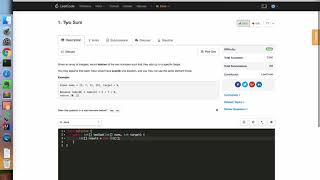


codestorywithMIK 13 mins
Two Sum | Leetcode 1 | Detailed Explanation | codestorywithMIK
Developer Docs 6 mins
Leetcode | 1. Two Sum | Easy | Java Solution
Pepcoding 17 mins
DSA Phir se with Sumeet | Leetcode 1 | Two Sum
One Code Man 6 mins
TWO SUM - LeetCode 1 - Coding Interview Questions
Code With K5KC 12 mins
Two Sum - Leetcode 1 | 4 Approaches: Brute Force, Sorting + Binary Search/Two Pointers and Hashmap
Naresh Gupta 8 mins
Two Sum | 2 Sum leetcode | Leetcode 1| Array HashMap | Google Amazon Facebook Microsoft Apple
AlgoJS 5 mins
Two Sum - LeetCode 1 - JavaScript
Deepti Talesra 15 mins
Two Sum - LeetCode 1 - Python (2 Ways!)
Coding Sphere 6 mins
1. Two Sum || JavaScript || Leetcode || Hindi
Coding with Minmer 28 mins
Two Sum || Leetcode 1|| 2 Variant Questions Big Tech Actually Asks
Srk Codes 13 mins
Two Sum | Leetcode #1 Explained in Telugu | Brute Force & Optimal HashMap Solution | srkcodes
LeetCodeWithMonu 11 mins
1. Two Sum | JavaScript | LeetCode | Data Structure
Aryan Mittal 13 mins
1. Two Sum | Day 003 | Brute - Better - Optimal
Programmers Zone 20 mins
1 Two Sum | Zero to FAANG Kunal | Assignment Solution | Leetcode
Xavier Elon 13 mins
LeetCode 1 | Two Sum | All Solutions Explained | Java + Whiteboard
StatLearn Tech 20 mins
Two Sum Leetcode 1 | Brute to Optimal in Python (Step-by-Step DSA)
Sai Anish Malla 8 mins
Two Sum | LeetCode 1 | Theory + Python code
Fisher Coder 7 mins
LeetCode 1: Two Sum - Interview Prep Ep 1
LC Bear 6 mins
Leetcode 001 - Two Sum "Brute Force Solution" (Java, Solution Explained)
WorkWithGoogler 11 mins
Amazon Coding Interview Question | Leetcode 1 | Two Sum
20 videos
did my crawler come up with invalid videos ? drop me a line.
Similar Problems
- problem 15: 3Sum
- problem 167: Two Sum II - Input Array Is Sorted
- problem 170: Two Sum III - Data structure design
- problem 1679: Max Number of K-Sum Pairs
- problem 2023: Number of Pairs of Strings With Concatenation Equal to Target
- problem 2200: Find All K-Distant Indices in an Array
- problem 2354: Number of Excellent Pairs
- problem 2441: Largest Positive Integer That Exists With Its Negative
8 similar problems
Solved On The Same Day
18 easy
- problem 9: Palindrome Number
- problem 14: Longest Common Prefix
- problem 20: Valid Parentheses
- problem 26: Remove Duplicates from Sorted Array
- problem 27: Remove Element
- problem 83: Remove Duplicates from Sorted List
- problem 88: Merge Sorted Array
- problem 94: Binary Tree Inorder Traversal
- problem 100: Same Tree
- problem 104: Maximum Depth of Binary Tree
- problem 121: Best Time to Buy and Sell Stock
- problem 136: Single Number
- problem 141: Linked List Cycle
- problem 169: Majority Element
- problem 190: Reverse Bits
- problem 226: Invert Binary Tree
- problem 234: Palindrome Linked List
- problem 1114: Print in Order
- problem 3: Longest Substring Without Repeating Characters
- problem 7: Reverse Integer
- problem 8: String to Integer (atoi)
- problem 11: Container With Most Water
- problem 12: Integer to Roman
- problem 15: 3Sum
- problem 17: Letter Combinations of a Phone Number
- problem 22: Generate Parentheses
- problem 31: Next Permutation
- problem 36: Valid Sudoku
- problem 39: Combination Sum
- problem 40: Combination Sum II
- problem 45: Jump Game II
- problem 46: Permutations
- problem 47: Permutations II
- problem 48: Rotate Image
- problem 49: Group Anagrams
- problem 55: Jump Game
- problem 59: Spiral Matrix II
- problem 75: Sort Colors
- problem 77: Combinations
- problem 91: Decode Ways
- problem 95: Unique Binary Search Trees II
- problem 96: Unique Binary Search Trees
- problem 134: Gas Station
- problem 164: Maximum Gap
- problem 189: Rotate Array
- problem 215: Kth Largest Element in an Array
- problem 238: Product of Array Except Self
- problem 287: Find the Duplicate Number
- problem 322: Coin Change
- problem 347: Top K Frequent Elements
- problem 377: Combination Sum IV
- problem 438: Find All Anagrams in a String
- problem 474: Ones and Zeroes
- problem 518: Coin Change II
- problem 526: Beautiful Arrangement
- problem 763: Partition Labels
- problem 983: Minimum Cost For Tickets
- problem 994: Rotting Oranges
- problem 1027: Longest Arithmetic Subsequence
- problem 2140: Solving Questions With Brainpower
- problem 2466: Count Ways To Build Good Strings
- problem 4: Median of Two Sorted Arrays
- problem 41: First Missing Positive
64 solutions
August 8, 2023
Extra
There are a few extra pages giving you some insights into my setup:
- Tech Stack - my development environment and tools
- AI - how AI helped me create this website (NOT solving the problems)
- Progress - progression over time
- Quality - code quality