Python 1171.py
class Solution:
    def removeZeroSumSublists(self, head: Optional[ListNode]) -> Optional[ListNode]:
        sums = defaultdict()
        sums[0] = head

        # first pass: compute all sums and their latest occurrence
        node  = head
        total = 0
        while node:
            total += node.val
            sums[total] = node.next
            node = node.next

        # second pass: build new list with nodes from pass 1
        prehead = node = ListNode()
        total = 0
        while node:
            # basically identical loop
            total += node.val
            # except the following line has its left and right side reversed
            node.next = sums[total]
            node = node.next

        return prehead.next
24 lines
|
775 bytes
|
submitted November 23, 2023
|
GitHub
23% comment ratio
|
tab size 4
|
low complexity
Difficulty
This problem is ranked as
and has an acceptance rate of about 53% (300k+ submissions).
Typical patterns to solve this problem:
easy
medium
hard
and has an acceptance rate of about 53% (300k+ submissions).
Typical patterns to solve this problem:
- Hash Table
- Linked List
I solved 663 easy, 1250 medium and 309 hard problems
AI Disclaimer
Every single line of code was written by me, 100% from scratch, between August 2023 and August 2024.
However, two years later I set up this website and used various AI tools to generate most of the walkthrough / explanations below.
See this dedicated page for more details.
However, two years later I set up this website and used various AI tools to generate most of the walkthrough / explanations below.
See this dedicated page for more details.
Code Walkthrough
Overview
The provided implementation defines a method that removes all consecutive sequences of nodes whose values sum to zero from a singly-linked list. It accomplishes this in two traversals: the first records the latest position where each cumulative sum occurs, and the second rewires the list based on those recorded positions. The approach guarantees that any zero-sum segment, regardless of its length or location, is eliminated from the final list.
First Traversal - Recording Prefix Sums
During the initial pass the algorithm walks through the original list while maintaining a running total of node values. For each cumulative sum it stores a reference to the node that follows the current one. This mapping enables the later step to jump over any segment whose sum returns to a previously seen total.
sums = defaultdict()
sums[0] = head

node  = head
total = 0
while node:
    total += node.val
    sums[total] = node.next
    node = node.next
Key aspects of this segment include the initialization of the dictionary with a zero sum pointing to the original head, which ensures that a zero-sum prefix at the very start of the list can be detected. The use of defaultdict allows the dictionary to be created without specifying a default factory, relying on explicit assignments only.
Second Traversal - Reconstructing the List
The second pass creates a dummy node (prehead) to simplify edge-case handling and then iterates through the list again, this time using the previously built map to skip over zero-sum intervals. By setting node.next to the stored successor for the current cumulative sum, the algorithm effectively removes any intervening nodes whose values collectively sum to zero.
prehead = node = ListNode()
total = 0
while node:
    total += node.val
    node.next = sums[total]
    node = node.next
The dummy node ensures that the method can return prehead.next safely even when the entire original list is eliminated. The loop’s logic mirrors the first traversal, guaranteeing that the same cumulative sums are encountered in the same order, which is essential for correctly applying the stored jump pointers.
Edge Cases Handled
When the input list is empty, the initial dictionary entry for sum zero points to None, and both traversals terminate immediately, resulting in a None return value. If the list consists of a single node whose value is zero, the first pass records a sum of zero mapping to None, and the second pass rewires the dummy node’s next to None, effectively removing the sole element. Situations where multiple overlapping zero-sum sublists exist are also covered because the dictionary always retains the latest occurrence of each sum, allowing the second pass to skip the longest possible zero-sum segment at each step.
Performance Optimizations
The algorithm achieves linear time behavior by avoiding nested loops; each node is visited exactly twice. Storing only the most recent occurrence of each cumulative sum eliminates the need for additional scans to locate the appropriate jump point. The use of a dummy head removes conditional checks for head manipulation, streamlining pointer updates. By reusing the same total variable across both passes, the code minimizes auxiliary storage, relying solely on the hash map to retain necessary state. This combination of a single hash table and two straightforward passes yields an efficient solution for the zero-sum sublist removal problem.
written by openai gpt
ELI5 - Simplified Explanation
Imagine a long train track made of many numbered cars. Some cars have positive numbers, and some have negative numbers that act like holes sucking the value away. The goal is to find groups of cars sitting next to each other that add up to zero, because if they equal zero, they are just extra weight that can be removed entirely.
The computer starts by walking along the train track and keeping a running tally of the numbers as it visits each car. It plays a game of memory where it remembers the very last spot it saw a specific total number on a map. If it sees the same total twice, it knows that everything between those two spots adds up to exactly zero.
After it finishes walking the track the first time, it goes back to the beginning to rebuild the train. This time, whenever it hits a total it has seen before, it skips over all the middle cars and jumps straight to the end of where that group used to be. It keeps doing this until it reaches the end of the line, leaving behind a new, shorter train that has no hidden secrets adding up to nothing. By the time it finishes, all the junk has been cleared away, leaving only the cars that actually make the train move.
written by google gemini
Code Quality
Several LLMs ranked my code quality on a scale from 1 (very poor) to 10 (outstanding):
n = 27
|
median = 4
|
μ = 4.52
|
σ = 2.03
Complexity Analysis
Time: linear
As a rule of thumb, the maximum input size for one second execution time is
As a rule of thumb, the maximum input size for one second execution time is
- factorial: up to 10 elements
- exponential: up to 20 elements
- polynomial: a few thousand elements
- loglinear: up to 100,000 elements
- linear: a few million elements
- logarithmic: a billion elements
- constant: practically unlimited
generated automatically
Other Solutions
I wrote a basic crawler to find other solutions to that problem.
Obviously, I did that after I solved the problem myself.
In general, AlgoMonster and WalkCCC solutions are high-quality and always worth a look.
I haven't checked most of the other solutions, but they might be helpful as well.
And of course, the LeetCode forum is always a good place (or even the best) to look for alternative approaches.
(click on a column header to sort the table)
| author | ||||||||||
|---|---|---|---|---|---|---|---|---|---|---|
| author | solutions | |||||||||
| www | AlgoMonster | Python | C++ | Java | TS | |||||
| WalkCCC | Python | C++ | Java | |||||||
| leetcode.ca | Python | C++ | Java | Go | Rust | TS | ||||
| Progiez | Python | C++ | Java | |||||||
| github | black-shadows | C++ | ||||||||
| charles-wangkai | Java | |||||||||
| everthis | JS | |||||||||
| fartem | Ruby | |||||||||
| fpdjsns | C++ | |||||||||
| fsq | C++ | |||||||||
| halfrost | Go | |||||||||
| JoshCrozier | JS | |||||||||
| lkwq007 | Python | |||||||||
| pruthvikp | Python | |||||||||
| suxrobGM | C# | |||||||||
| trung-hn | Python | |||||||||
| varunu28 | Java | |||||||||
| YuriSpiridonov | Python | |||||||||
| AlgoMonster | C++, Python, Java, TypeScript | |||||||||
| WalkCCC | C++, Python, Java | |||||||||
| leetcode.ca | C++, Go, Java, Python, Rust, TypeScript | |||||||||
| Progiez | C++, Java, Python | |||||||||
| black-shadows | C++, C++ | |||||||||
| charles-wangkai | Java | |||||||||
| everthis | JavaScript | |||||||||
| fartem | Ruby | |||||||||
| fpdjsns | C++ | |||||||||
| fsq | C++ | |||||||||
| halfrost | Go | |||||||||
| JoshCrozier | JavaScript | |||||||||
| lkwq007 | Python | |||||||||
| pruthvikp | Python | |||||||||
| suxrobGM | C# | |||||||||
| trung-hn | Python | |||||||||
| varunu28 | Java | |||||||||
| YuriSpiridonov | Python |
30 links
|
18 authors
|
9 languages
Videos
These are a few popular YouTube videos for this problem:


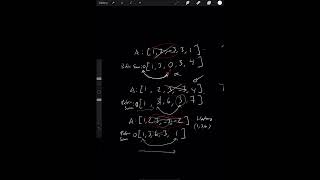
Aryan Mittal 35 mins
1171. Remove Zero Sum Consecutive Nodes from Linked List | Prefix Sum | Brute -to- Optimal
Sleepy Cracker 8 mins
LeetCode 1171 | Remove Zero Sum Consecutive Nodes from Linked List | HashMap | PreSum | Java
Programming Live with Larry 43 mins
1171. Remove Zero Sum Consecutive Nodes from Linked List (Leetcode Medium)
Algorithms Casts 19 mins
Leetcode 1171: Remove Zero Sum Consecutive Nodes from Linked List
JomaClass 18 mins
Remove Zero Sum Consecutive Nodes from Linked List (Leetcode 1171) | LeetCode Tutorial
5 videos
did my crawler come up with invalid videos ? drop me a line.
Similar Problems
- problem 1474: Delete N Nodes After M Nodes of a Linked List
1 similar problem
Solved On The Same Day
1 easy
- problem 2932: Maximum Strong Pair XOR I
- problem 731: My Calendar II
- problem 792: Number of Matching Subsequences
- problem 820: Short Encoding of Words
- problem 911: Online Election
- problem 950: Reveal Cards In Increasing Order
- problem 1023: Camelcase Matching
- problem 1038: Binary Search Tree to Greater Sum Tree
- problem 1170: Compare Strings by Frequency of the Smallest Character
- problem 1696: Jump Game VI
- problem 2327: Number of People Aware of a Secret
- problem 432: All O`one Data Structure
- problem 732: My Calendar III
- problem 1044: Longest Duplicate Substring
15 solutions
November 23, 2023
Extra
There are a few extra pages giving you some insights into my setup:
- Tech Stack - my development environment and tools
- AI - how AI helped me create this website (NOT solving the problems)
- Progress - progression over time
- Quality - code quality