Python 0122.py
class Solution:
    def maxProfit(self, prices: List[int]) -> int:
        total = 0
        for i in range(1, len(prices)):
            change = prices[i] - prices[i-1]
            if change > 0:
                total += change
        return total
Difficulty
This problem is ranked as
and has an acceptance rate of about 71% (4+ million submissions).
Typical patterns to solve this problem:
easy
medium
hard
and has an acceptance rate of about 71% (4+ million submissions).
Typical patterns to solve this problem:
- Array
- Dynamic Programming
- Greedy
I solved 663 easy, 1250 medium and 309 hard problems
AI Disclaimer
Every single line of code was written by me, 100% from scratch, between August 2023 and August 2024.
However, two years later I set up this website and used various AI tools to generate most of the walkthrough / explanations below.
See this dedicated page for more details.
Code Walkthrough
Overview
The provided implementation defines a class Solution with a method maxProfit that computes the maximum profit obtainable from a sequence of stock prices. The algorithm iterates through the price list once, accumulating positive day-to-day price differences. By summing only the gains, it effectively captures the total profit achievable through any number of buy-sell transactions without overlapping.
Key Steps
The core of the algorithm consists of three distinct operations: initialization, iteration with change detection, and accumulation of profitable differences.
The initialization creates a variable to hold the running total of profit.
total = 0The iteration starts from the second element of the prices list, ensuring each price is compared with its immediate predecessor.
for i in range(1, len(prices)):Within the loop, the change between consecutive days is calculated.
change = prices[i] - prices[i-1]A conditional check determines whether the change represents a profit. Only positive changes contribute to the total.
if change > 0:
    total += change
After processing all price pairs, the method returns the accumulated profit.
return totalEdge Cases Handled
The algorithm gracefully handles several edge conditions without additional branching:
-
Empty or Single-Element Input: When
pricescontains zero or one element, therange(1, len(prices))produces an empty sequence, the loop body never executes, andtotalremains zero. The method correctly returns zero profit, reflecting the impossibility of any transaction. -
Monotonically Decreasing Prices: If each successive price is lower than the previous one, every computed
changeis non-positive. The conditionalif change > 0prevents any addition tototal, resulting in a final profit of zero, which aligns with the optimal strategy of not trading. -
Constant Prices: When all prices are identical, each
changeequals zero. The condition excludes these neutral changes, leavingtotalunchanged and correctly indicating no profit can be made. -
Large Price Fluctuations: The algorithm does not impose any limits on the magnitude of price differences. Positive spikes, regardless of size, are added directly to
total, ensuring the full profit from each upward movement is captured.
Performance Optimizations
The implementation exhibits several implicit performance characteristics:
-
Single Pass Traversal: By iterating once over the input list, the method avoids repeated scans or nested loops. This linear progression minimizes the number of memory accesses and keeps the runtime proportional to the length of the input.
-
In-Place Computation: The algorithm uses only a few scalar variables (
total,i,change) and does not allocate auxiliary data structures such as additional lists or dictionaries. This low memory footprint reduces pressure on the garbage collector and improves cache locality. -
Branch Prediction Friendly: The conditional
if change > 0is a simple comparison that modern CPUs can predict efficiently, especially when price sequences contain clusters of positive or negative changes. This contributes to steady execution speed across varied data patterns. -
Avoidance of Redundant Operations: The calculation of
changedirectly uses the two adjacent elements without intermediate storage or function calls. The immediate use of the result in the conditional eliminates unnecessary temporaries.
Overall, the method delivers a concise and efficient solution for computing maximum achievable profit under the given transaction model.
written by openai gpt
ELI5 - Simplified Explanation
Imagine you have a collection of magic number cards that change their values every day, and you want to make as much play money as possible. The code starts with a piggy bank that begins empty. It looks at the price of a card today and compares it to the price of the same card from yesterday. If the price today is higher than it was yesterday, it means you caught a little bit of growth. The code takes that extra amount and drops it into the piggy bank. If the price went down or stayed the same, the code simply skips it and moves on to the next day. It does this step by step for every single card until it reaches the end of the line, keeping all the little gains it found along the way.
written by google gemini
Code Quality
Several LLMs ranked my code quality on a scale from 1 (very poor) to 10 (outstanding):
n = 27
|
median = 8
|
μ = 8.52
|
σ = 0.83
Complexity Analysis
Time: linear
As a rule of thumb, the maximum input size for one second execution time is
As a rule of thumb, the maximum input size for one second execution time is
- factorial: up to 10 elements
- exponential: up to 20 elements
- polynomial: a few thousand elements
- loglinear: up to 100,000 elements
- linear: a few million elements
- logarithmic: a billion elements
- constant: practically unlimited
generated automatically
Other Solutions
I wrote a basic crawler to find other solutions to that problem.
Obviously, I did that after I solved the problem myself.
In general, AlgoMonster and WalkCCC solutions are high-quality and always worth a look.
I haven't checked most of the other solutions, but they might be helpful as well.
And of course, the LeetCode forum is always a good place (or even the best) to look for alternative approaches.
(click on a column header to sort the table)
| author | |||||||||||||
|---|---|---|---|---|---|---|---|---|---|---|---|---|---|
| author | solutions | ||||||||||||
| www | AlgoMonster | C++ | Python | Java | TS | ||||||||
| WalkCCC | C++ | Python | Java | ||||||||||
| leetcode.ca | C++ | Python | C# | Java | Rust | JS | Go | TS | |||||
| LeetcodeHelp | C++ | Python | Java | ||||||||||
| MemoryLimitExceeded | C++ | Python | |||||||||||
| Progiez | C++ | Python | Java | ||||||||||
| github | AdelDaniel | Dart | |||||||||||
| aylei | Rust | ||||||||||||
| begeekmyfriend | C | ||||||||||||
| BigEggStudy | C# | ||||||||||||
| black-shadows | C++ | ||||||||||||
| chandansgowda | Python | ||||||||||||
| charles-wangkai | Java | ||||||||||||
| chenyanzhe | C++ | ||||||||||||
| DimitrisJim | C | ||||||||||||
| everthis | JS | ||||||||||||
| FelixFan1122 | C# | ||||||||||||
| fpdjsns | C++ | ||||||||||||
| gaosq0604 | Python | ||||||||||||
| halfrost | Go | ||||||||||||
| JoshCrozier | JS | ||||||||||||
| keineahnung2345 | C++ | ||||||||||||
| lennylxx | C | ||||||||||||
| linouk23 | C++ | ||||||||||||
| lkwq007 | Python | ||||||||||||
| luangong | C++ | ||||||||||||
| martianoff | Scala | ||||||||||||
| qiyuangong | Python | ||||||||||||
| ruoru | Rust | ||||||||||||
| shreymehul | C# | ||||||||||||
| sonugiri1043 | C++ | ||||||||||||
| suxrobGM | C# | ||||||||||||
| trung-hn | Python | ||||||||||||
| varunu28 | Java | ||||||||||||
| vli02 | C | ||||||||||||
| vthwang | Java | ||||||||||||
| XiaotaoGuo | C++ | ||||||||||||
| yuanliu666 | Kotlin | ||||||||||||
| zfang399 | C++ | ||||||||||||
| AlgoMonster | C++, Python, Java, TypeScript | ||||||||||||
| WalkCCC | C++, Python, Java | ||||||||||||
| leetcode.ca | C++, C#, Go, Java, JavaScript, Python, Rust, TypeScript | ||||||||||||
| LeetcodeHelp | C++, Java, Python | ||||||||||||
| MemoryLimitExceeded | Python, C++ | ||||||||||||
| Progiez | C++, Java, Python | ||||||||||||
| AdelDaniel | Dart | ||||||||||||
| aylei | Rust | ||||||||||||
| begeekmyfriend | C | ||||||||||||
| BigEggStudy | C# | ||||||||||||
| black-shadows | C++, C++ | ||||||||||||
| chandansgowda | Python | ||||||||||||
| charles-wangkai | Java | ||||||||||||
| chenyanzhe | C++ | ||||||||||||
| DimitrisJim | C | ||||||||||||
| everthis | JavaScript | ||||||||||||
| FelixFan1122 | C# | ||||||||||||
| fpdjsns | C++ | ||||||||||||
| gaosq0604 | Python | ||||||||||||
| halfrost | Go | ||||||||||||
| JoshCrozier | JavaScript | ||||||||||||
| keineahnung2345 | C++ | ||||||||||||
| lennylxx | C | ||||||||||||
| linouk23 | C++ | ||||||||||||
| lkwq007 | Python | ||||||||||||
| luangong | C++ | ||||||||||||
| martianoff | Scala | ||||||||||||
| qiyuangong | Python | ||||||||||||
| ruoru | Rust | ||||||||||||
| shreymehul | C# | ||||||||||||
| sonugiri1043 | C++ | ||||||||||||
| suxrobGM | C# | ||||||||||||
| trung-hn | Python | ||||||||||||
| varunu28 | Java | ||||||||||||
| vli02 | C | ||||||||||||
| vthwang | Java | ||||||||||||
| XiaotaoGuo | C++ | ||||||||||||
| yuanliu666 | Kotlin | ||||||||||||
| zfang399 | C++ |
56 links
|
39 authors
|
12 languages
Videos
These are a few popular YouTube videos for this problem:


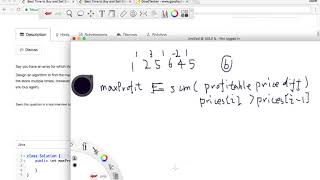









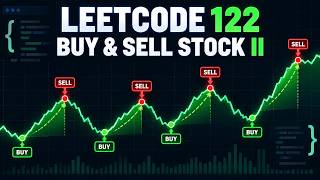
NeetCode 7 mins
Best Time to Buy and Sell a Stock II - Leetcode 122 - Python
Algorithms Made Easy 5 mins
Best Time to Buy and Sell Stock II | Live Coding with Explanation | Leetcode - 122
Greg Hogg 10 mins
Best Time to Buy and Sell Stock II - Leetcode 122 - Arrays & Strings (Python)
GoodTecher 6 mins
LeetCode Tutorial 122. Best Time to Buy and Sell Stock II
Deepti Talesra 10 mins
Best Time to Buy and Sell Stock II - LeetCode 122 - Python #leetcode #greedy
Xavier Elon 7 mins
LeetCode 122 | Best Time to Buy and Sell Stock II | Solution Explained (Java + Whiteboard)
Eric Programming 12 mins
[Java] Leetcode 122. Best Time to Buy and Sell Stock II [DP Decision Making #2]
Tech Tutor 9 mins
Best Time to Buy and Sell Stock II | LeetCode 122 | Java
Naresh Gupta 9 mins
best time to buy and sell stock ii | best time to buy and sell stock II leetcode | leetcode 122
Coding Decoded 8 mins
Best Time to Buy and Sell Stock II | Leetcode 122 | Live coding session | DP 🔥🔥🔥
Software Interviews Prep 9 mins
Leetcode | Top Interview 150 | Medium | 122. Best Time to Buy and Sell Stock II | Javascript
Komal Pal 7 mins
122. Best Time to Buy and Sell Stock II | Leetcode Medium | C++| Java| Python | Javascript
Programming Live with Larry 7 mins
Daily Leetcode #589: Nov 10, 2021 - 122. Best Time to Buy and Sell Stock II
Code Scribbler 5 mins
LeetCode 122: Best Time to Buy and Sell Stock II | Java Solution | Greedy Approach
Code Scribbler 5 mins
LeetCode 122: Best Time to Buy and Sell Stock II | C# Solution | Greedy Approach
Algorithms Casts 18 mins
Leetcode 122. Best Time to Buy and Sell Stock II
Programming Live with Larry 13 mins
122. Best Time to Buy and Sell Stock II (Leetcode Easy)
Code-Yao 8 mins
Leetcode 122. Best Time to Buy and Sell Stock II - compute differencing array and sum positive diff
WorkWithGoogler 4 mins
Facebook Coding Interview Question | Leetcode 122 | Best Time to Buy and Sell Stock II
Math Geeks 5 mins
122. Best Time to Buy and Sell Stock II
20 videos
did my crawler come up with invalid videos ? drop me a line.
Similar Problems
- problem 121: Best Time to Buy and Sell Stock
- problem 123: Best Time to Buy and Sell Stock III
- problem 309: Best Time to Buy and Sell Stock with Cooldown
- problem 714: Best Time to Buy and Sell Stock with Transaction Fee
4 similar problems
Solved On The Same Day
2 easy
- problem 108: Convert Sorted Array to Binary Search Tree
- problem 482: License Key Formatting
- problem 72: Edit Distance
- problem 167: Two Sum II - Input Array Is Sorted
- problem 453: Minimum Moves to Equal Array Elements
- problem 515: Find Largest Value in Each Tree Row
- problem 535: Encode and Decode TinyURL
- problem 123: Best Time to Buy and Sell Stock III
9 solutions
August 21, 2023
Extra
There are a few extra pages giving you some insights into my setup:
- Tech Stack - my development environment and tools
- AI - how AI helped me create this website (NOT solving the problems)
- Progress - progression over time
- Quality - code quality