Python 0257.py
class Solution:
    def deeper(self, root, track):
        if not root:
            return

        next = track + [ root.val ]
        if not root.left and not root.right:
            self.all.append(next)
        else:
            self.deeper(root.left,  next)
            self.deeper(root.right, next)

    def binaryTreePaths(self, root: Optional[TreeNode]) -> List[str]:
        self.all = []
        self.deeper(root, [])

        result = []
        for a in self.all:
            result.append("->".join(str(b) for b in a))
        return result
Difficulty
This problem is ranked as
and has an acceptance rate of about 69% (1+ million submissions).
Typical patterns to solve this problem:
easy
medium
hard
and has an acceptance rate of about 69% (1+ million submissions).
Typical patterns to solve this problem:
- Backtracking
- Binary Tree
- Depth First Search
- String
- Tree
I solved 663 easy, 1250 medium and 309 hard problems
AI Disclaimer
Every single line of code was written by me, 100% from scratch, between August 2023 and August 2024.
However, two years later I set up this website and used various AI tools to generate most of the walkthrough / explanations below.
See this dedicated page for more details.
However, two years later I set up this website and used various AI tools to generate most of the walkthrough / explanations below.
See this dedicated page for more details.
Code Walkthrough
Overview
The provided implementation defines a class Solution that generates all root-to-leaf paths of a binary tree in the form of strings separated by "->". The core logic is split between a helper method deeper that performs a depth-first traversal and accumulates node values, and the public method binaryTreePaths that prepares the traversal, invokes the helper, and formats the collected paths.
Recursive Traversal
The deeper method is the engine of the depth-first search. It receives a tree node root and a list track that represents the path taken from the root of the tree to the current node. The first conditional checks whether the current node is None; if so, the recursion terminates immediately, preventing any further processing of a missing subtree.
if not root:
    return
When a valid node is present, a new list next is created by appending the node’s value to the existing track. This copy-on-write approach ensures that each recursive branch works with its own path list, avoiding unintended side effects between sibling branches.
next = track + [ root.val ]The method then distinguishes leaf nodes from internal nodes. A leaf is identified by the absence of both left and right children. In that case, the completed path next is stored in the instance variable self.all.
if not root.left and not root.right:
    self.all.append(next)
If the node is not a leaf, the recursion proceeds to explore the left and right subtrees, passing the updated path list next to each call.
self.deeper(root.left,  next)
self.deeper(root.right, next)
Path Collection
The public method binaryTreePaths initializes the container self.all as an empty list before starting the traversal. By resetting this attribute at the start of each call, the method guarantees that results from previous invocations do not leak into the current computation.
self.all = []
self.deeper(root, [])
After the recursive exploration finishes, self.all holds a list of lists, where each inner list contains the integer values of a root-to-leaf path in order.
Result Construction
The final phase transforms the numeric paths into the required string representation. An empty list result is created, and a loop iterates over each path stored in self.all. For each path a, a generator expression converts each integer b to a string, and "->".join concatenates them with the arrow delimiter. The resulting string is appended to result.
result = []
for a in self.all:
    result.append("->".join(str(b) for b in a))
return result
The method returns result, which contains all root-to-leaf paths formatted as specified.
Edge Cases
The implementation gracefully handles an empty tree. When root is None, the initial call to deeper returns immediately, leaving self.all empty. Consequently, the loop that builds result does not execute, and the method returns an empty list, which correctly represents the absence of any paths.
Leaf nodes that have only one child are also correctly processed. The check for a leaf (not root.left and not root.right) ensures that a node with a single child is not mistakenly treated as a terminal point; the recursion continues down the existing child, and the path is only recorded when a true leaf is reached.
The use of track + [ root.val ] creates a fresh list for each recursive call, preventing the accidental sharing of mutable state between different branches. This design choice eliminates bugs that could arise from mutating a shared list while traversing multiple branches simultaneously.
Performance Optimizations
The algorithm leverages a depth-first search that visits each node exactly once, building paths incrementally without revisiting nodes. By constructing a new list for each recursive step rather than modifying a single shared list, the code avoids the overhead of backtracking operations such as pop, which would be required if a mutable list were reused. This approach simplifies the control flow and reduces the chance of errors related to list state management.
Storing intermediate paths in self.all as lists of integers, rather than as strings, defers the string concatenation cost until after the traversal is complete. This separation means that the recursive phase focuses solely on tree navigation and path accumulation, while the formatting phase handles the relatively inexpensive conversion to strings in a single pass.
Overall, the implementation balances clarity and efficiency by isolating traversal logic from formatting, using immutable path extensions to avoid side effects, and minimizing work inside the recursive calls.
written by openai gpt
ELI5 - Simplified Explanation
Imagine a tree standing upside down with its roots at the top and many branches growing downward. Each branch ends at a little spot called a leaf. This code acts like a tiny explorer wandering through that tree.
The explorer starts at the very top and travels down the branches one by one. Every time the explorer visits a spot, it remembers the path taken by writing down the name of the spot in a notebook.
When the explorer reaches a leaf, which is a spot where no more branches grow, it knows the journey for that path is finished. The explorer carefully saves that whole path of names into a collection.
After exploring every single branch, the explorer looks at the notebook full of paths. It goes through each path, ties the names together with little arrows, and creates a neat list of all the journeys that reached the very end of the tree.
written by google gemini
Code Quality
Several LLMs ranked my code quality on a scale from 1 (very poor) to 10 (outstanding):
n = 27
|
median = 6
|
μ = 6.11
|
σ = 1.03
Complexity Analysis
not analyzed yet
Other Solutions
I wrote a basic crawler to find other solutions to that problem.
Obviously, I did that after I solved the problem myself.
In general, AlgoMonster and WalkCCC solutions are high-quality and always worth a look.
I haven't checked most of the other solutions, but they might be helpful as well.
And of course, the LeetCode forum is always a good place (or even the best) to look for alternative approaches.
(click on a column header to sort the table)
| author | ||||||||||||
|---|---|---|---|---|---|---|---|---|---|---|---|---|
| author | solutions | |||||||||||
| www | AlgoMonster | C++ | Python | Java | TS | |||||||
| WalkCCC | C++ | Python | Java | |||||||||
| leetcode.ca | C++ | Python | Java | Go | TS | |||||||
| LeetcodeHelp | C++ | Python | Java | |||||||||
| MemoryLimitExceeded | C++ | Python | ||||||||||
| Progiez | C++ | Python | Java | |||||||||
| github | aylei | Rust | ||||||||||
| BigEggStudy | C# | |||||||||||
| black-shadows | C++ | |||||||||||
| chandansgowda | Python | |||||||||||
| charles-wangkai | Java | |||||||||||
| chenyanzhe | C++ | |||||||||||
| DimitrisJim | C | |||||||||||
| everthis | JS | |||||||||||
| fartem | Ruby | |||||||||||
| fengvyi | C++ | |||||||||||
| Garvit244 | Python | |||||||||||
| gouthampradhan | Java | |||||||||||
| halfrost | Go | |||||||||||
| haoel | C++ | |||||||||||
| JoshCrozier | JS | |||||||||||
| keineahnung2345 | C++ | |||||||||||
| Krazune | C++ | |||||||||||
| lennylxx | C++ | |||||||||||
| linouk23 | C++ | |||||||||||
| lkwq007 | Python | |||||||||||
| lzl124631x | C++ | |||||||||||
| qiyuangong | Python | |||||||||||
| ruoru | Rust | |||||||||||
| shreymehul | C# | |||||||||||
| sonugiri1043 | C++ | |||||||||||
| suxrobGM | C# | |||||||||||
| varunu28 | Java | |||||||||||
| vli02 | C | |||||||||||
| XiaotaoGuo | C++ | |||||||||||
| yuanliu666 | Kotlin | |||||||||||
| YuriSpiridonov | Python | |||||||||||
| zfang399 | C++ | |||||||||||
| AlgoMonster | C++, Python, Java, TypeScript | |||||||||||
| WalkCCC | C++, Python, Java | |||||||||||
| leetcode.ca | C++, Go, Java, Python, TypeScript | |||||||||||
| LeetcodeHelp | C++, Java, Python | |||||||||||
| MemoryLimitExceeded | Python, C++ | |||||||||||
| Progiez | C++, Java, Python | |||||||||||
| aylei | Rust | |||||||||||
| BigEggStudy | C# | |||||||||||
| black-shadows | C++, C++ | |||||||||||
| chandansgowda | Python | |||||||||||
| charles-wangkai | Java | |||||||||||
| chenyanzhe | C++ | |||||||||||
| DimitrisJim | C | |||||||||||
| everthis | JavaScript | |||||||||||
| fartem | Ruby | |||||||||||
| fengvyi | C++ | |||||||||||
| Garvit244 | Python | |||||||||||
| gouthampradhan | Java | |||||||||||
| halfrost | Go | |||||||||||
| haoel | C++ | |||||||||||
| JoshCrozier | JavaScript | |||||||||||
| keineahnung2345 | C++ | |||||||||||
| Krazune | C++ | |||||||||||
| lennylxx | C++ | |||||||||||
| linouk23 | C++ | |||||||||||
| lkwq007 | Python | |||||||||||
| lzl124631x | C++ | |||||||||||
| qiyuangong | Python | |||||||||||
| ruoru | Rust | |||||||||||
| shreymehul | C# | |||||||||||
| sonugiri1043 | C++ | |||||||||||
| suxrobGM | C# | |||||||||||
| varunu28 | Java | |||||||||||
| vli02 | C | |||||||||||
| XiaotaoGuo | C++ | |||||||||||
| yuanliu666 | Kotlin | |||||||||||
| YuriSpiridonov | Python | |||||||||||
| zfang399 | C++ |
52 links
|
38 authors
|
11 languages
Videos
These are a few popular YouTube videos for this problem:


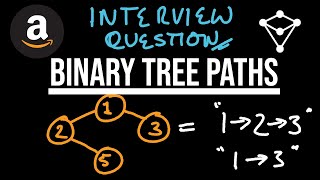
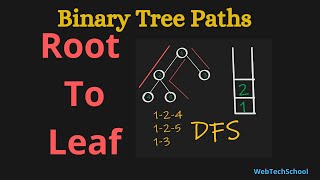





Nick White 10 mins
LeetCode 257. Binary Tree Paths (Algorithm Explained)
code Explainer 8 mins
257. Binary Tree Paths | LEETCODE EASY | TREE
Programming Live with Larry 5 mins
257. Binary Tree Paths (Leetcode Easy)
Java2Novice 10 mins
Print All Paths In Binary Tree | LeetCode 257
AlgoJS 7 mins
Binary Tree Paths - LeetCode 257 - JavaScript
WebTechSchool (WebTechSchool.com) 15 mins
Binary Tree Root to Leaf Path | Leetcode 257 | Data Structures & Algorithms
Abdullah Arshed 5 mins
257. Binary Tree Paths | Leetcode | Python
Ghumman Tech 5 mins
Leetcode Question 257 "Binary Tree Paths" in Java
SDE Skills 14 mins
Leetcode [257] Binary Tree Paths
Code Scribbler 4 mins
LeetCode 257 | Binary Tree Paths | Easy | Efficient Solution Explained |
Becoming A Better Dev (with David) 9 mins
How To Solve "257 Binary Tree Paths" on LeetCode - JavaScript
Sleepy Cracker 6 mins
LeetCode 257 | Binary Tree Paths | Recursion | Java
Mohit Chhabra 10 mins
Leetcode Problem 257 | Binary Tree Paths - Code Walkthrough
Srk Codes 11 mins
Leetcode 257: Binary Tree Paths in Telugu | Stack, Brute | Python DSA | srkcodes
Software Interviews Prep 7 mins
Leetcode | 257. Binary Tree Paths | Easy | Javascript
Math Geeks 3 mins
Leetcode 257 Binary Tree Paths
hakunamatasq 8 mins
257. Binary Tree Paths (LeetCode)
Software Interviews Prep 18 mins
Leetcode | Easy | 257. Binary Tree Paths | Recursion | Time complexity: O(n) | Javascript
Pirai's Academy 7 mins
Binary Tree Paths | Leetcode 257 | Approach + Code with explanation.
19 videos
did my crawler come up with invalid videos ? drop me a line.
Similar Problems
- problem 113: Path Sum II
- problem 988: Smallest String Starting From Leaf
2 similar problems
Solved On The Same Day
2 easy
- problem 551: Student Attendance Record I
- problem 605: Can Place Flowers
- problem 236: Lowest Common Ancestor of a Binary Tree
- problem 289: Game of Life
- problem 397: Integer Replacement
- problem 413: Arithmetic Slices
- problem 525: Contiguous Array
- problem 567: Permutation in String
9 solutions
August 22, 2023
Extra
There are a few extra pages giving you some insights into my setup:
- Tech Stack - my development environment and tools
- AI - how AI helped me create this website (NOT solving the problems)
- Progress - progression over time
- Quality - code quality