C++ 0290.cpp
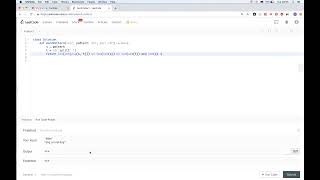
class Solution {
public:
    bool wordPattern(string pattern, string s) {
        map<char, string> p;

        stringstream text;
        text.str(s);

        for (auto c : pattern)
        {
            string word;
            text >> word;

            if (word.empty())
                return false;

            if (p.count(c) == 0)
            {
                p[c] = word;
                continue;
            }

            if (word != p[c])
                return false;
        }

        // make sure patterns are unique
        unordered_set<string> u;
        for (auto i : p)
        {
            if (u.count(i.second) > 0)
                return false;
            u.insert(i.second);
        }

        string x;
        text >> x;
        return x.empty();
    }
};
Difficulty
This problem is ranked as
and has an acceptance rate of about 44% (2+ million submissions).
Typical patterns to solve this problem:
easy
medium
hard
and has an acceptance rate of about 44% (2+ million submissions).
Typical patterns to solve this problem:
- Hash Table
- String
I solved 663 easy, 1250 medium and 309 hard problems
AI Disclaimer
Every single line of code was written by me, 100% from scratch, between August 2023 and August 2024.
However, two years later I set up this website and used various AI tools to generate most of the walkthrough / explanations below.
See this dedicated page for more details.
However, two years later I set up this website and used various AI tools to generate most of the walkthrough / explanations below.
See this dedicated page for more details.
Code Walkthrough
Overview
The wordPattern method determines whether a given string s follows the same pattern as the characters in pattern. It treats each character in pattern as a placeholder for a distinct word in s. The method builds a mapping from pattern characters to words, verifies that the mapping is consistent throughout the string, ensures that no two characters map to the same word, and finally checks that the entire input string has been consumed.
Parsing the Input String
The function uses a stringstream to extract words from s one by one. By feeding the whole string into the stream, the code can read space-separated tokens with the extraction operator (>>).
stringstream text;
text.str(s);
Mapping Pattern Characters to Words
For each character c in pattern, the code reads the next word from the stream. If the stream yields an empty word, the pattern cannot be satisfied and the function returns false. When a character has not been seen before, it is added to the map p with the current word as its value.
for (auto c : pattern)
{
    string word;
    text >> word;

    if (word.empty())
        return false;

    if (p.count(c) == 0)
    {
        p[c] = word;
        continue;
    }

    if (word != p[c])
        return false;
}
Verifying One-to-One Correspondence
After the initial pass, the map may contain multiple characters that point to the same word, which would violate the required bijection. The code iterates over the map entries and uses an unordered_set to detect duplicate word values. Encountering a duplicate causes an immediate false return.
unordered_set<string> u;
for (auto i : p)
{
    if (u.count(i.second) > 0)
        return false;
    u.insert(i.second);
}
Ensuring Complete Consumption of the Input
The final step checks that no extra words remain after processing all characters of pattern. By attempting to read one more token into x, the code confirms that the stream is exhausted; if x is non-empty, the input contains surplus words and the pattern does not match.
string x;
text >> x;
return x.empty();
Edge Cases Handled
The implementation gracefully handles several boundary conditions. When the input string contains fewer words than there are characters in the pattern, the extraction yields an empty string, triggering an early false. Conversely, if the string contains more words than the pattern length, the final stream read detects the leftover token and returns false. The duplicate-word detection step prevents two different pattern characters from mapping to the same word, covering the case where the pattern would otherwise appear to match but violates the one-to-one requirement. Additionally, an empty pattern with an empty string results in a successful match because the loop body never executes and the final stream read finds no extra tokens.
Performance Optimizations
The algorithm employs early exits to avoid unnecessary work. As soon as a mismatch is detected-whether due to a missing word, an inconsistent mapping, or a duplicate word-the function returns immediately, preventing further iteration. The use of unordered_set for duplicate detection provides average-case constant-time lookups, making the uniqueness check efficient even for larger inputs. Storing the mapping in a map allows logarithmic-time access for each character lookup, which balances the need for ordered storage with acceptable performance for typical input sizes. By processing the input string in a single pass and performing the uniqueness verification in a separate linear pass over the map, the overall work scales linearly with the length of the pattern and the number of distinct words.
written by openai gpt
ELI5 - Simplified Explanation
Imagine you have a puzzle with little stickers and colored blocks. Each sticker has a special shape like a circle or a star on it. The task is to make sure every shape always matches up with the exact same color.
The code starts by getting a list of stickers and a pile of blocks. It looks at the first sticker and says that this shape must belong to the first block it finds. It keeps a notebook to write down which shape goes with which color. If it sees a shape that is already in the notebook, it checks the pile to see if the block is the right color. If the color is different, the puzzle is broken, so it stops.
After checking all the stickers, it does one more important job. It looks through the notebook to make sure every single shape is matched to a different color. If two different shapes are trying to claim the same color block, that is not allowed either. Finally, it makes sure there are no leftover blocks sitting in the pile. If every sticker has a perfect match and nobody is left over, the puzzle is solved correctly.
written by google gemini
Code Quality
Several LLMs ranked my code quality on a scale from 1 (very poor) to 10 (outstanding):
n = 27
|
median = 6
|
μ = 6.52
|
σ = 1.45
Complexity Analysis
not analyzed yet
Other Solutions
I wrote a basic crawler to find other solutions to that problem.
Obviously, I did that after I solved the problem myself.
In general, AlgoMonster and WalkCCC solutions are high-quality and always worth a look.
I haven't checked most of the other solutions, but they might be helpful as well.
And of course, the LeetCode forum is always a good place (or even the best) to look for alternative approaches.
(click on a column header to sort the table)
| author | ||||||||||||
|---|---|---|---|---|---|---|---|---|---|---|---|---|
| author | solutions | |||||||||||
| www | AlgoMonster | C++ | Python | Java | TS | |||||||
| WalkCCC | C++ | Python | Java | |||||||||
| leetcode.ca | C++ | Python | Java | C# | Rust | Go | TS | |||||
| LeetcodeHelp | C++ | Python | Java | |||||||||
| MemoryLimitExceeded | C++ | Python | ||||||||||
| Progiez | C++ | Python | Java | |||||||||
| github | aylei | Rust | ||||||||||
| BigEggStudy | C# | |||||||||||
| black-shadows | C++ | |||||||||||
| charles-wangkai | Java | |||||||||||
| chenyanzhe | C++ | |||||||||||
| Dijkstra-Edu | Java | |||||||||||
| everthis | JS | |||||||||||
| fartem | Ruby | |||||||||||
| fengvyi | C++ | |||||||||||
| halfrost | Go | |||||||||||
| haoel | C++ | |||||||||||
| JoshCrozier | JS | |||||||||||
| keineahnung2345 | C++ | |||||||||||
| lennylxx | C++ | |||||||||||
| linouk23 | C++ | |||||||||||
| lkwq007 | Python | |||||||||||
| martianoff | Scala | |||||||||||
| pruthvikp | Python | |||||||||||
| qiyuangong | Python | |||||||||||
| ruoru | Rust | |||||||||||
| shreymehul | C# | |||||||||||
| sonugiri1043 | C++ | |||||||||||
| suxrobGM | C# | |||||||||||
| trung-hn | Python | |||||||||||
| varunu28 | Java | |||||||||||
| vli02 | C | |||||||||||
| vthwang | Java | |||||||||||
| XiaotaoGuo | C++ | |||||||||||
| YuriSpiridonov | Python | |||||||||||
| zfang399 | C++ | |||||||||||
| AlgoMonster | C++, Python, Java, TypeScript | |||||||||||
| WalkCCC | C++, Python, Java | |||||||||||
| leetcode.ca | C++, C#, Go, Java, Python, Rust, TypeScript | |||||||||||
| LeetcodeHelp | C++, Java, Python | |||||||||||
| MemoryLimitExceeded | Python, C++ | |||||||||||
| Progiez | C++, Java, Python | |||||||||||
| aylei | Rust | |||||||||||
| BigEggStudy | C# | |||||||||||
| black-shadows | C++, C++ | |||||||||||
| charles-wangkai | Java | |||||||||||
| chenyanzhe | C++ | |||||||||||
| Dijkstra-Edu | Java | |||||||||||
| everthis | JavaScript | |||||||||||
| fartem | Ruby | |||||||||||
| fengvyi | C++ | |||||||||||
| halfrost | Go | |||||||||||
| haoel | C++ | |||||||||||
| JoshCrozier | JavaScript | |||||||||||
| keineahnung2345 | C++ | |||||||||||
| lennylxx | C++ | |||||||||||
| linouk23 | C++ | |||||||||||
| lkwq007 | Python | |||||||||||
| martianoff | Scala | |||||||||||
| pruthvikp | Python | |||||||||||
| qiyuangong | Python | |||||||||||
| ruoru | Rust | |||||||||||
| shreymehul | C# | |||||||||||
| sonugiri1043 | C++ | |||||||||||
| suxrobGM | C# | |||||||||||
| trung-hn | Python | |||||||||||
| varunu28 | Java | |||||||||||
| vli02 | C | |||||||||||
| vthwang | Java | |||||||||||
| XiaotaoGuo | C++ | |||||||||||
| YuriSpiridonov | Python | |||||||||||
| zfang399 | C++ |
52 links
|
36 authors
|
11 languages
Videos
These are a few popular YouTube videos for this problem:







NeetCode 10 mins
Word Pattern - Leetcode 290 - Python
Ayushi Sharma 14 mins
5. Word Pattern 🔥| Strings - Easy | Leetcode 290 | Hashmap
Nick White 9 mins
LeetCode 290. Word Pattern Solution Explained - Java
Knowledge Center 21 mins
Word Pattern | LeetCode 290 | C++, Java, Python
Coding Sphere 16 mins
290. Word Pattern || Java || Leetcode || Hindi
Engineering Digest 8 mins
LeetCode 290 Solution in Hindi | Word Pattern | Leetcode Bootcamp
Naresh Gupta 12 mins
word pattern | word pattern leetcode | leetcode 290 | 2 solutions
Sai Anish Malla 6 mins
Word Pattern | Leet code 290 | Theory explained + Python code
Developer Docs 7 mins
Leetcode | 290. Word Pattern | Easy | Java Solution
Becoming A Better Dev (with David) 14 mins
290 Word Pattern - LeetCode Javascript
Francesco Manicardi 4 mins
LeetCode 290. [easy] Word Pattern
TechWithSaumya 9 mins
290. Word Pattern | Leetcode || Coding with Explanation
CodeFreaks 14 mins
290 || Word Pattern || Leetcode Daily Challenge
Coding Decoded 12 mins
Word Pattern | Leetcode 290 | Live coding session 🔥🔥🔥🔥
nexTRIE 12 mins
Word Pattern - Google Interview Questions - LeetCode 290 Solution - C++
TheAnalyticGuy 7 mins
Leetcode 290 Word Pattern (Java)
code Explainer 8 mins
290. Word Pattern | LEETCODE EASY | STRING
Programming Live with Larry 6 mins
Daily Leetcode #1006: Jan 01, 2023 - 290. Word Pattern
Code Scribbler 6 mins
LeetCode 290 | Word Pattern | Easy | C# Solution |
Algorithms Casts 21 mins
Leetcode 290. Word Pattern
20 videos
did my crawler come up with invalid videos ? drop me a line.
Similar Problems
- problem 205: Isomorphic Strings
- problem 291: Word Pattern II
- problem 890: Find and Replace Pattern
3 similar problems
Solved On The Same Day
9 easy
- problem 125: Valid Palindrome
- problem 191: Number of 1 Bits
- problem 202: Happy Number
- problem 217: Contains Duplicate
- problem 219: Contains Duplicate II
- problem 383: Ransom Note
- problem 392: Is Subsequence
- problem 1047: Remove All Adjacent Duplicates In String
- problem 1089: Duplicate Zeros
- problem 151: Reverse Words in a String
- problem 187: Repeated DNA Sequences
- problem 51: N-Queens
- problem 52: N-Queens II
- problem 60: Permutation Sequence
- problem 68: Text Justification
- problem 76: Minimum Window Substring
- problem 135: Candy
- problem 140: Word Break II
- problem 220: Contains Duplicate III
- problem 239: Sliding Window Maximum
- problem 352: Data Stream as Disjoint Intervals
- problem 502: IPO
- problem 895: Maximum Frequency Stack
- problem 982: Triples with Bitwise AND Equal To Zero
- problem 995: Minimum Number of K Consecutive Bit Flips
- problem 996: Number of Squareful Arrays
- problem 2136: Earliest Possible Day of Full Bloom
28 solutions
August 9, 2023
Extra
There are a few extra pages giving you some insights into my setup:
- Tech Stack - my development environment and tools
- AI - how AI helped me create this website (NOT solving the problems)
- Progress - progression over time
- Quality - code quality