Python 0350.py
class Solution:
    def intersect(self, nums1: List[int], nums2: List[int]) -> List[int]:
        freq = defaultdict(int)
        for a in nums1:
            freq[a] += 1

        result = []
        for a in nums2:
            if a in freq and freq[a] > 0:
                result.append(a)
                freq[a] -= 1
        return result
Difficulty
This problem is ranked as
and has an acceptance rate of about 60% (3+ million submissions).
Typical patterns to solve this problem:
easy
medium
hard
and has an acceptance rate of about 60% (3+ million submissions).
Typical patterns to solve this problem:
- Array
- Binary Search
- Hash Table
- Sorting
- Two Pointers
I solved 663 easy, 1250 medium and 309 hard problems
AI Disclaimer
Every single line of code was written by me, 100% from scratch, between August 2023 and August 2024.
However, two years later I set up this website and used various AI tools to generate most of the walkthrough / explanations below.
See this dedicated page for more details.
However, two years later I set up this website and used various AI tools to generate most of the walkthrough / explanations below.
See this dedicated page for more details.
Code Walkthrough
Overview
The provided implementation computes the intersection of two integer arrays, returning each common element as many times as it appears in both arrays. It builds a frequency table for the first array, then walks through the second array, collecting elements that still have a positive count in the table. The result preserves the multiplicity of intersecting values without requiring additional sorting or auxiliary structures beyond the frequency map.
Building the Frequency Table
The first phase creates a hash-based counter that records how many times each value occurs in the first input list. By using a defaultdict(int), the code avoids explicit existence checks when incrementing counts.
freq = defaultdict(int)
for a in nums1:
    freq[a] += 1
Each iteration updates the dictionary in constant time, ensuring that the table accurately reflects the multiplicity of every element in nums1.
Collecting Intersecting Elements
The second phase iterates over the second list. For each element, the code checks two conditions: the element must be present as a key in the frequency table, and its associated count must be greater than zero. When both hold, the element is appended to the result list and the stored count is decremented, guaranteeing that an element is emitted no more times than it appears in nums1.
result = []
for a in nums2:
    if a in freq and freq[a] > 0:
        result.append(a)
        freq[a] -= 1
The decrement step is crucial; it prevents over-counting when the same value appears multiple times in nums2 but fewer times in nums1.
Edge Cases Handled
When either input list is empty, the frequency table or the iteration loop simply produces no entries, and the function returns an empty list. Duplicate values are correctly managed because the frequency table tracks exact counts, and the decrement operation limits the number of times a duplicate can be added to the result. The algorithm also works with negative integers and zero, as the dictionary keys are the raw integer values without any transformation. Extremely large integer values pose no issue because Python’s integer type handles arbitrary precision, and the hash table stores them directly.
Performance Optimizations
The use of a hash map (defaultdict) provides constant-time average access for both incrementing counts and checking membership, eliminating the need for sorting or binary search. By decrementing the count in place, the code avoids a secondary data structure to remember which elements have already been matched. The result list is built incrementally, which is more efficient than concatenating strings or creating intermediate collections. Overall, the algorithm processes each input element exactly once, leading to a streamlined execution path.
written by openai gpt
ELI5 - Simplified Explanation
Imagine there are two boxes filled with colorful toy blocks. Some blocks have the same shape, like a red square or a blue circle. The goal is to find out which blocks appear in both boxes and put them into a new container.
First, look through the first box and keep a tally of every single block shape found. Think of this like making a secret list where each number tells how many of a specific toy exist in that box.
After the list is ready, look at the second box one block at a time. For every block held in your hand, check the secret list to see if that same shape is inside the first box and if there are any left over to share. If the shape is on the list and at least one is available, put that block into the new container and cross one off the list so it cannot be used again. By the time every block in the second box has been checked, the new container holds all the matching pairs found in both groups.
written by google gemini
Code Quality
Several LLMs ranked my code quality on a scale from 1 (very poor) to 10 (outstanding):
n = 27
|
median = 8
|
μ = 7.96
|
σ = 1.35
Complexity Analysis
Time: linear
As a rule of thumb, the maximum input size for one second execution time is
As a rule of thumb, the maximum input size for one second execution time is
- factorial: up to 10 elements
- exponential: up to 20 elements
- polynomial: a few thousand elements
- loglinear: up to 100,000 elements
- linear: a few million elements
- logarithmic: a billion elements
- constant: practically unlimited
generated automatically
Other Solutions
I wrote a basic crawler to find other solutions to that problem.
Obviously, I did that after I solved the problem myself.
In general, AlgoMonster and WalkCCC solutions are high-quality and always worth a look.
I haven't checked most of the other solutions, but they might be helpful as well.
And of course, the LeetCode forum is always a good place (or even the best) to look for alternative approaches.
(click on a column header to sort the table)
| author | ||||||||||||
|---|---|---|---|---|---|---|---|---|---|---|---|---|
| author | solutions | |||||||||||
| www | AlgoMonster | C++ | Python | Java | TS | |||||||
| WalkCCC | C++ | Python | Java | |||||||||
| leetcode.ca | C++ | Python | C# | JS | Java | Go | Rust | PHP | TS | |||
| LeetcodeHelp | C++ | Python | Java | |||||||||
| MemoryLimitExceeded | C++ | Python | ||||||||||
| Progiez | C++ | Python | Java | |||||||||
| github | BigEggStudy | C# | ||||||||||
| black-shadows | C++ | |||||||||||
| chandansgowda | Python | |||||||||||
| charles-wangkai | Java | |||||||||||
| chenyanzhe | C++ | |||||||||||
| everthis | JS | |||||||||||
| fartem | Ruby | |||||||||||
| FelixFan1122 | C# | |||||||||||
| fpdjsns | C++ | |||||||||||
| Garvit244 | Python | |||||||||||
| halfrost | Go | |||||||||||
| haoel | C++ | |||||||||||
| JoshCrozier | JS | |||||||||||
| Krazune | C++ | |||||||||||
| linouk23 | C++ | |||||||||||
| lkwq007 | Python | |||||||||||
| muhammadfarhankt | Go | |||||||||||
| qiyuangong | Python | |||||||||||
| ruoru | Rust | |||||||||||
| shreymehul | C# | |||||||||||
| sonugiri1043 | C++ | |||||||||||
| suxrobGM | C# | |||||||||||
| varunu28 | Java | |||||||||||
| vli02 | C | |||||||||||
| withaarzoo | C++ | |||||||||||
| XiaotaoGuo | C++ | |||||||||||
| zfang399 | C++ | |||||||||||
| AlgoMonster | C++, Python, Java, TypeScript | |||||||||||
| WalkCCC | C++, Python, Java | |||||||||||
| leetcode.ca | C++, C#, Go, Java, JavaScript, PHP, Python, Rust, TypeScript | |||||||||||
| LeetcodeHelp | C++, Java, Python | |||||||||||
| MemoryLimitExceeded | Python, C++ | |||||||||||
| Progiez | C++, Java, Python | |||||||||||
| BigEggStudy | C# | |||||||||||
| black-shadows | C++, C++ | |||||||||||
| chandansgowda | Python | |||||||||||
| charles-wangkai | Java | |||||||||||
| chenyanzhe | C++ | |||||||||||
| everthis | JavaScript | |||||||||||
| fartem | Ruby | |||||||||||
| FelixFan1122 | C# | |||||||||||
| fpdjsns | C++ | |||||||||||
| Garvit244 | Python | |||||||||||
| halfrost | Go | |||||||||||
| haoel | C++ | |||||||||||
| JoshCrozier | JavaScript | |||||||||||
| Krazune | C++ | |||||||||||
| linouk23 | C++ | |||||||||||
| lkwq007 | Python | |||||||||||
| muhammadfarhankt | Go | |||||||||||
| qiyuangong | Python | |||||||||||
| ruoru | Rust | |||||||||||
| shreymehul | C# | |||||||||||
| sonugiri1043 | C++ | |||||||||||
| suxrobGM | C# | |||||||||||
| varunu28 | Java | |||||||||||
| vli02 | C | |||||||||||
| withaarzoo | C++ | |||||||||||
| XiaotaoGuo | C++ | |||||||||||
| zfang399 | C++ |
51 links
|
33 authors
|
11 languages
Videos
These are a few popular YouTube videos for this problem:


Fisher Coder 16 mins
LeetCode 350: Intersection of Two Arrays II - Interview Prep Ep 50
codestorywithMIK 15 mins
Intersection of Two Arrays II | 2 Approaches | Easy Explanations | Leetcode 350 | codestorywithMIK
ShashCode 10 mins
350. Intersection of Two Arrays II | hashing | leetcode daily challenge | DSA | Hindi
Coding Decoded 7 mins
Intersection of Two Arrays II | Leetcode 350 | Live coding session
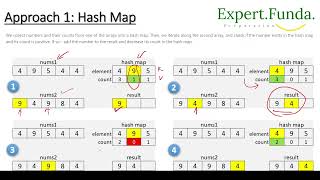
ExpertFunda 11 mins
Leetcode 350. Intersection of two Arrays II Java Solution asked in google
5 videos
did my crawler come up with invalid videos ? drop me a line.
Similar Problems
- problem 349: Intersection of Two Arrays
- problem 1002: Find Common Characters
- problem 2215: Find the Difference of Two Arrays
- problem 2540: Minimum Common Value
4 similar problems
Solved On The Same Day
12 easy
- problem 342: Power of Four
- problem 344: Reverse String
- problem 345: Reverse Vowels of a String
- problem 349: Intersection of Two Arrays
- problem 387: First Unique Character in a String
- problem 412: Fizz Buzz
- problem 414: Third Maximum Number
- problem 434: Number of Segments in a String
- problem 448: Find All Numbers Disappeared in an Array
- problem 485: Max Consecutive Ones
- problem 504: Base 7
- problem 507: Perfect Number
13 solutions
August 13, 2023
Extra
There are a few extra pages giving you some insights into my setup:
- Tech Stack - my development environment and tools
- AI - how AI helped me create this website (NOT solving the problems)
- Progress - progression over time
- Quality - code quality