C++ 0043.cpp
class Solution {
public:
    void addReversed(string& result, string& num2)
    {
        while (result.size() < num2.size() && num2.back() == '0')
            num2.pop_back();
        while (result.size() < num2.size())
            result += '0';
        while (result.size() > num2.size())
            num2 += '0';

        int carry = 0;
        for (int i = 0; i < result.size(); i++)
        {
            auto sum = carry + (result[i] - '0') + (num2[i] - '0');
            result[i] = (sum % 10) + '0';
            carry = sum / 10;
        }
        if (carry > 0)
            result += '1';
    }

    string multiply(string num1, string num2) {
        if (num1 == "0" || num2 == "0")
            return "0";

        reverse(num1.begin(), num1.end());
        reverse(num2.begin(), num2.end());

        // premultiplied
        string two[10];
        string singleSum = num2;
        for (int i = 1; i <= 9; i++)
        {
            two[i] = singleSum;
            addReversed(singleSum, num2);
        }

        string result;
        for (auto one : num1)
        {
            int factor = one - '0';
            addReversed(result, two[factor]);

            for (auto& t : two)
                t.insert(t.begin(), '0');
        }

        reverse(result.begin(), result.end());
        return result;
    }
};
Difficulty
This problem is ranked as
and has an acceptance rate of about 45% (2+ million submissions).
Typical patterns to solve this problem:
easy
medium
hard
and has an acceptance rate of about 45% (2+ million submissions).
Typical patterns to solve this problem:
- Math
- Simulation
- String
I solved 663 easy, 1250 medium and 309 hard problems
AI Disclaimer
Every single line of code was written by me, 100% from scratch, between August 2023 and August 2024.
However, two years later I set up this website and used various AI tools to generate most of the walkthrough / explanations below.
See this dedicated page for more details.
However, two years later I set up this website and used various AI tools to generate most of the walkthrough / explanations below.
See this dedicated page for more details.
Code Walkthrough
Overview
The provided implementation defines a Solution class that multiplies two non-negative integer values represented as decimal strings. The algorithm works entirely with character arrays, avoiding conversion to built-in numeric types, which allows it to handle arbitrarily large numbers. The multiplication proceeds by reversing the input strings, precomputing scaled versions of the second operand, and repeatedly adding these scaled strings to an accumulating result.
Core Functions
addReversed
addReversed adds the contents of num2 to result assuming both strings are stored in reverse order (least significant digit first). The function first discards any trailing zeros in num2 that would not affect the sum when result is shorter. It then equalizes the lengths of the two strings by appending '0' characters to the shorter one. The core addition loop iterates over each digit, computes the sum with a carry, writes the new digit back into result, and updates the carry. If a carry remains after processing all positions, an extra '1' is appended.
void addReversed(string& result, string& num2)
{
    while (result.size() < num2.size() && num2.back() == '0')
        num2.pop_back();
    while (result.size() < num2.size())
        result += '0';
    while (result.size() > num2.size())
        num2 += '0';

    int carry = 0;
    for (int i = 0; i < result.size(); i++)
    {
        auto sum = carry + (result[i] - '0') + (num2[i] - '0');
        result[i] = (sum % 10) + '0';
        carry = sum / 10;
    }
    if (carry > 0)
        result += '1';
}
multiply
multiply orchestrates the overall multiplication. It begins with a quick check for either operand being "0" and returns "0" immediately, handling the trivial zero case. Both input strings are reversed to align least significant digits at index 0, simplifying digit-wise operations.
A pre-multiplication table two[10] is built where two[i] holds the product of num2 with the digit i. Starting from i = 1, each entry is generated by repeatedly invoking addReversed on a running sum singleSum. This creates all necessary scaled versions of num2 without recomputing them from scratch for each digit of num1.
The main accumulation loop iterates over each character one in the reversed num1. The numeric value of one selects the appropriate pre-scaled string two[factor], which is then added to result via addReversed. After each addition, every entry in the pre-scaled table is shifted left by inserting a '0' at the front, effectively multiplying each entry by ten to align with the next higher digit position of num1.
Finally, the accumulated result string, still in reverse order, is reversed back to normal orientation before being returned.
string multiply(string num1, string num2) {
    if (num1 == "0" || num2 == "0")
        return "0";

    reverse(num1.begin(), num1.end());
    reverse(num2.begin(), num2.end());

    // premultiplied
    string two[10];
    string singleSum = num2;
    for (int i = 1; i <= 9; i++)
    {
        two[i] = singleSum;
        addReversed(singleSum, num2);
    }

    string result;
    for (auto one : num1)
    {
        int factor = one - '0';
        addReversed(result, two[factor]);

        for (auto& t : two)
            t.insert(t.begin(), '0');
    }

    reverse(result.begin(), result.end());
    return result;
}
Edge Cases Handled
The implementation explicitly checks for the presence of a zero operand at the very start of multiply. By returning "0" immediately, it avoids unnecessary processing and guarantees correct output for inputs like "0" paired with any other numeric string.
Within addReversed, the loop that removes trailing '0' characters from num2 when result is shorter ensures that superfluous zeros do not inflate the length of the operand, preventing incorrect carry propagation. The length-balancing steps guarantee that both strings have identical sizes before digit-wise addition, which eliminates out-of-range accesses.
The pre-multiplication table is built only for digits 1 through 9. The entry for 0 remains empty, and when a digit of num1 is '0', the addition step effectively adds an empty string, leaving the accumulated result unchanged. This behavior correctly models the contribution of a zero multiplier digit.
The final reversal of result restores the conventional most-significant-digit-first representation, ensuring that the returned string does not contain leading zeros (except the single zero case handled earlier).
Performance Optimizations
The code avoids repeated multiplication of num2 by each digit of num1 by constructing a lookup table two[10] that stores all possible single-digit products of num2. This precomputation reduces the number of addition operations required during the main loop, as each digit of num1 can be processed with a single addReversed call.
addReversed performs in-place updates on the result string, eliminating the need for auxiliary buffers or temporary copies. By appending zeros to the shorter operand rather than creating new padded strings, the function minimizes memory allocations.
The shifting of all pre-scaled strings after each digit of num1 is achieved by inserting a '0' at the beginning of each string. This operation is cheap because the strings are stored in reverse order; inserting at the front corresponds to appending a zero to the least significant side of the actual number, which aligns naturally with the reversed representation.
Overall, the algorithm leverages digit-wise addition, precomputed multiples, and in-place string manipulation to achieve an efficient multiplication routine for large integer strings without resorting to heavyweight big-integer libraries.
written by openai gpt
ELI5 - Simplified Explanation
Imagine there are two large numbers made of blocks. Because they are too big for a normal box, they are saved as a row of letters. Since computers find it easier to work from the back to the front, the code begins by flipping these rows around.
The task is to multiply these numbers, which is like stacking sets of blocks repeatedly. The code prepares a special shelf of pre-stacked blocks for the numbers one through nine. To get these stacks, it uses a helper tool that adds numbers together. Adding is handled by looking at each pair of blocks and keeping track of when a set of ten is finished, which is passed over as a little bonus to the next spot.
When multiplying, the code looks at each digit in the first number. It grabs the matching stack from the shelf and adds it to an overall pile. Before moving to the next digit, the code adds an extra empty block to the front of all the stacks on the shelf. This acts just like when humans write down a zero while working out math problems on paper to keep everything in the right place.
After all the digits have been processed and added to the big pile, the final result is currently facing the wrong way. The code flips the result one last time to make the number readable in the correct order.
written by google gemini
Code Quality
Several LLMs ranked my code quality on a scale from 1 (very poor) to 10 (outstanding):
n = 28
|
median = 4.5
|
μ = 4.61
|
σ = 1.80
Complexity Analysis
Time: polynomial
As a rule of thumb, the maximum input size for one second execution time is
As a rule of thumb, the maximum input size for one second execution time is
- factorial: up to 10 elements
- exponential: up to 20 elements
- polynomial: a few thousand elements
- loglinear: up to 100,000 elements
- linear: a few million elements
- logarithmic: a billion elements
- constant: practically unlimited
generated automatically
Other Solutions
I wrote a basic crawler to find other solutions to that problem.
Obviously, I did that after I solved the problem myself.
In general, AlgoMonster and WalkCCC solutions are high-quality and always worth a look.
I haven't checked most of the other solutions, but they might be helpful as well.
And of course, the LeetCode forum is always a good place (or even the best) to look for alternative approaches.
(click on a column header to sort the table)
| author | |||||||||||||
|---|---|---|---|---|---|---|---|---|---|---|---|---|---|
| author | solutions | ||||||||||||
| www | AlgoMonster | C++ | Java | Python | TS | ||||||||
| WalkCCC | C++ | Java | Python | ||||||||||
| leetcode.ca | C++ | Java | Python | Rust | JS | C# | Go | PHP | TS | ||||
| LeetcodeHelp | C++ | Java | Python | ||||||||||
| MemoryLimitExceeded | C++ | Python | |||||||||||
| Progiez | C++ | Java | Python | ||||||||||
| github | aylei | Rust | |||||||||||
| begeekmyfriend | C | ||||||||||||
| BigEggStudy | C# | ||||||||||||
| black-shadows | C++ | ||||||||||||
| charles-wangkai | Java | ||||||||||||
| chenyanzhe | C++ | ||||||||||||
| everthis | JS | ||||||||||||
| fartem | Ruby | ||||||||||||
| fengvyi | C++ | ||||||||||||
| fpdjsns | C++ | ||||||||||||
| gaosq0604 | Python | ||||||||||||
| gouthampradhan | Java | ||||||||||||
| halfrost | Go | ||||||||||||
| haoel | C++ | ||||||||||||
| JoshCrozier | JS | ||||||||||||
| keineahnung2345 | C++ | ||||||||||||
| lennylxx | C | ||||||||||||
| linouk23 | C++ | ||||||||||||
| lkwq007 | Python | ||||||||||||
| luangong | C++ | ||||||||||||
| MacJim | C++ | ||||||||||||
| qiyuangong | Python | ||||||||||||
| ruoru | Rust | ||||||||||||
| suxrobGM | C# | ||||||||||||
| varunu28 | Java | ||||||||||||
| vli02 | C | ||||||||||||
| vthwang | Java | ||||||||||||
| XiaotaoGuo | C++ | ||||||||||||
| yuanliu666 | Kotlin | ||||||||||||
| AlgoMonster | C++, Python, Java, TypeScript | ||||||||||||
| WalkCCC | C++, Python, Java | ||||||||||||
| leetcode.ca | C++, C#, Go, Java, JavaScript, PHP, Python, Rust, TypeScript | ||||||||||||
| LeetcodeHelp | C++, Java, Python | ||||||||||||
| MemoryLimitExceeded | Python, C++ | ||||||||||||
| Progiez | C++, Java, Python | ||||||||||||
| aylei | Rust | ||||||||||||
| begeekmyfriend | C | ||||||||||||
| BigEggStudy | C# | ||||||||||||
| black-shadows | C++, C++ | ||||||||||||
| charles-wangkai | Java | ||||||||||||
| chenyanzhe | C++ | ||||||||||||
| everthis | JavaScript | ||||||||||||
| fartem | Ruby | ||||||||||||
| fengvyi | C++ | ||||||||||||
| fpdjsns | C++ | ||||||||||||
| gaosq0604 | Python | ||||||||||||
| gouthampradhan | Java | ||||||||||||
| halfrost | Go | ||||||||||||
| haoel | C++ | ||||||||||||
| JoshCrozier | JavaScript | ||||||||||||
| keineahnung2345 | C++ | ||||||||||||
| lennylxx | C | ||||||||||||
| linouk23 | C++ | ||||||||||||
| lkwq007 | Python | ||||||||||||
| luangong | C++ | ||||||||||||
| MacJim | C++ | ||||||||||||
| qiyuangong | Python | ||||||||||||
| ruoru | Rust | ||||||||||||
| suxrobGM | C# | ||||||||||||
| varunu28 | Java | ||||||||||||
| vli02 | C | ||||||||||||
| vthwang | Java | ||||||||||||
| XiaotaoGuo | C++ | ||||||||||||
| yuanliu666 | Kotlin |
53 links
|
35 authors
|
12 languages
Videos
These are a few popular YouTube videos for this problem:












NeetCode 18 mins
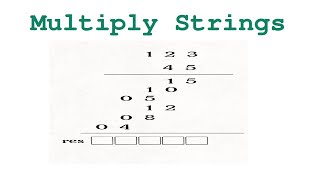
Multiply Strings - Leetcode 43 - Python
Pepcoding 50 mins
Multiply Strings | Leetcode 43 Solution in Hindi
Unnati Mishra 7 mins
Multiply Strings || Leetcode 43 || C++ Solution
happygirlzt 11 mins
LeetCode 43. Multiply Strings Explantion and Solution
Coding Decoded 10 mins
Multiply Strings | Leetcode 43 | Live coding session 🔥🔥🔥
happygirlzt 12 mins
LeetCode 43. Multiply Strings 中文解释 Chinese Version
Sleepy Cracker 9 mins
LeetCode 43 | Multiply Strings | Math | Java
Professor Oakes 7 mins
Multiply Strings Python Solution - LeetCode #43
Ghumman Tech 7 mins
Leetcode Question 43 "Multiply Strings" in Javascript
Web Fusion with Bharadwaj 16 mins
167. Leetcode 43. Multiply Strings : JAVA
Sean Chuah 11 mins
Multiply Strings - LeetCode #43 - C++
Code With Zi 16 mins
LeetCode: 43. Multiply Strings (Visualized)
Programming Live with Larry 17 mins
Daily Leetcode #586: Nov 07, 2021 - 43. Multiply Strings
WorkWithGoogler 7 mins
Microsoft Coding Interview Question | Leetcode 43 | Multiply Strings
CodeMeetsWorld 23 mins
LeetCode #43 (Multiply Strings) using Python | Solving all 150 NeetCode Problems | Episode 32
Srk Codes 20 mins
Leetcode 43: Multiply Strings in Telugu | Brute Force, Paper Method, Python DSA | srkcodes
Josh Ackland 11 mins
LeetCode in C# | 43. Multiply Strings
Web Fusion with Bharadwaj 18 mins
140. Leetcode 43. Multiply Strings : Javascript
iOSxBank 11 mins
Day 348: LeetCode Problem 43. Multiply Strings - Swift
Ghumman Tech 12 mins
Amazon Software Engineer Interview Preparation - Part 31 LC 43 Multiply Strings
20 videos
did my crawler come up with invalid videos ? drop me a line.
Similar Problems
- problem 2: Add Two Numbers
- problem 66: Plus One
- problem 415: Add Strings
3 similar problems
Solved On The Same Day
40 easy
- problem 13: Roman to Integer
- problem 21: Merge Two Sorted Lists
- problem 28: Find the Index of the First Occurrence in a String
- problem 35: Search Insert Position
- problem 58: Length of Last Word
- problem 66: Plus One
- problem 67: Add Binary
- problem 69: Sqrt(x)
- problem 70: Climbing Stairs
- problem 206: Reverse Linked List
- problem 242: Valid Anagram
- problem 278: First Bad Version
- problem 283: Move Zeroes
- problem 367: Valid Perfect Square
- problem 374: Guess Number Higher or Lower
- problem 389: Find the Difference
- problem 441: Arranging Coins
- problem 459: Repeated Substring Pattern
- problem 509: Fibonacci Number
- problem 657: Robot Return to Origin
- problem 682: Baseball Game
- problem 704: Binary Search
- problem 709: To Lower Case
- problem 744: Find Smallest Letter Greater Than Target
- problem 746: Min Cost Climbing Stairs
- problem 860: Lemonade Change
- problem 896: Monotonic Array
- problem 976: Largest Perimeter Triangle
- problem 1137: N-th Tribonacci Number
- problem 1232: Check If It Is a Straight Line
- problem 1275: Find Winner on a Tic Tac Toe Game
- problem 1351: Count Negative Numbers in a Sorted Matrix
- problem 1491: Average Salary Excluding the Minimum and Maximum Salary
- problem 1502: Can Make Arithmetic Progression From Sequence
- problem 1523: Count Odd Numbers in an Interval Range
- problem 1539: Kth Missing Positive Number
- problem 1572: Matrix Diagonal Sum
- problem 1672: Richest Customer Wealth
- problem 1768: Merge Strings Alternately
- problem 1822: Sign of the Product of an Array
- problem 2: Add Two Numbers
- problem 5: Longest Palindromic Substring
- problem 33: Search in Rotated Sorted Array
- problem 34: Find First and Last Position of Element in Sorted Array
- problem 50: Pow(x, n)
- problem 54: Spiral Matrix
- problem 62: Unique Paths
- problem 63: Unique Paths II
- problem 64: Minimum Path Sum
- problem 73: Set Matrix Zeroes
- problem 74: Search a 2D Matrix
- problem 120: Triangle
- problem 139: Word Break
- problem 153: Find Minimum in Rotated Sorted Array
- problem 198: House Robber
- problem 221: Maximal Square
- problem 275: H-Index II
- problem 279: Perfect Squares
- problem 300: Longest Increasing Subsequence
- problem 436: Find Right Interval
- problem 445: Add Two Numbers II
- problem 528: Random Pick with Weight
- problem 540: Single Element in a Sorted Array
- problem 611: Valid Triangle Number
- problem 658: Find K Closest Elements
- problem 852: Peak Index in a Mountain Array
- problem 981: Time Based Key-Value Store
- problem 1041: Robot Bounded In Circle
- problem 1146: Snapshot Array
- problem 2300: Successful Pairs of Spells and Potions
- problem 154: Find Minimum in Rotated Sorted Array II
72 solutions
August 7, 2023
Extra
There are a few extra pages giving you some insights into my setup:
- Tech Stack - my development environment and tools
- AI - how AI helped me create this website (NOT solving the problems)
- Progress - progression over time
- Quality - code quality