Python 0525.py
class Solution:
    def findMaxLength(self, nums: List[int]) -> int:
        first = dict()
        first[0] = -1

        result = 0
        current = 0
        for i in range(len(nums)):
            if nums[i] == 0:
                current -= 1
            else:
                current += 1
            print(i, "=", current)

            if current in first:
                distance = i - first[current]
                result = max(result, distance)
            else:
                first[current] = i

        return result
Difficulty
This problem is ranked as
and has an acceptance rate of about 51% (1+ million submissions).
Typical patterns to solve this problem:
easy
medium
hard
and has an acceptance rate of about 51% (1+ million submissions).
Typical patterns to solve this problem:
- Array
- Hash Table
- Prefix Sum
I solved 663 easy, 1250 medium and 309 hard problems
AI Disclaimer
Every single line of code was written by me, 100% from scratch, between August 2023 and August 2024.
However, two years later I set up this website and used various AI tools to generate most of the walkthrough / explanations below.
See this dedicated page for more details.
However, two years later I set up this website and used various AI tools to generate most of the walkthrough / explanations below.
See this dedicated page for more details.
Code Walkthrough
Overview
The provided implementation solves the classic problem of finding the longest contiguous sub-array with an equal number of 0s and 1s. It does so by converting the original binary values into a running balance, where a 0 decrements the balance and a 1 increments it. The balance acts as a prefix-sum identifier: whenever the same balance reappears, the segment between the two occurrences contains an equal count of 0s and 1s. The algorithm records the earliest index at which each balance value is seen, then computes the length of any later segment that returns to that balance, keeping the maximum length found.
Key Steps and Corresponding Snippets
The first important step is the creation of a dictionary that will map each observed balance to the earliest index where it occurs. The dictionary is seeded with a balance of zero at a virtual index of -1, which enables detection of a valid sub-array that starts at the very first element.
first = dict()
first[0] = -1
Next, the algorithm initializes two variables: result to hold the best length discovered so far, and current to maintain the running balance while iterating through the input list.
result = 0
current = 0
The core of the solution is a single pass over the input array. For each element, the balance is adjusted: a 0 reduces it, while a 1 increases it. A debug print statement outputs the index and the new balance, which can be useful during development or troubleshooting.
for i in range(len(nums)):
    if nums[i] == 0:
        current -= 1
    else:
        current += 1
    print(i, "=", current)
After updating the balance, the algorithm checks whether this balance has been seen before. If it has, the distance between the current index and the earliest index stored for this balance represents a candidate sub-array length. The result variable is updated with the larger of its current value and this candidate length.
    if current in first:
        distance = i - first[current]
        result = max(result, distance)
If the balance is new, the algorithm records the current index as the first occurrence of this balance. Storing only the earliest index ensures that any later distance calculation yields the longest possible segment for that particular balance value.
    else:
        first[current] = i
Finally, after the loop completes, the function returns the maximum length found.
return resultEdge Cases Handled
The code gracefully handles an empty input list. Since the loop body never executes, result remains at its initial value of zero, which correctly indicates that no qualifying sub-array exists.
When the input consists entirely of zeros or entirely of ones, the running balance never repeats after its initial entry. Consequently, the if current in first branch never triggers a length update, and the function returns zero, reflecting the absence of a balanced sub-array.
The initialization first[0] = -1 specifically addresses the scenario where a balanced sub-array begins at index zero. By treating the virtual position before the array as having a balance of zero, the distance calculation i - first[current] correctly yields the length of a prefix that itself is balanced.
Alternating patterns such as [0, 1, 0, 1] produce frequent balance repetitions. The algorithm captures each repeat, computes the corresponding distances, and updates result accordingly, ultimately returning the full length of the array when the entire sequence is balanced.
Performance Optimizations Observed
The solution employs a hash map (dict) to store balance-to-index mappings, providing constant-time average lookups and insertions. This choice eliminates the need for nested loops or repeated scans of the array, ensuring that each element is processed exactly once.
By recording only the first occurrence of each balance, the algorithm avoids unnecessary overwrites and guarantees that any later distance calculation yields the longest possible segment for that balance. This strategy reduces the amount of stored data to at most one entry per distinct balance value, which is bounded by the length of the input.
The use of a single integer variable (current) to track the running balance avoids the overhead of constructing auxiliary prefix-sum arrays. This minimalistic state management keeps memory usage low and improves cache locality during iteration.
The debug print statement, while useful for tracing, can be redirected or disabled in production contexts without affecting the core logic, allowing the algorithm to retain its efficiency when such output is suppressed.
written by openai gpt
ELI5 - Simplified Explanation
Imagine a line of colorful blocks where some are blue and some are red. This code is like a game to find the longest part of the line that has an equal number of blue and red blocks. To keep score, the code starts with a special bag called a dictionary to remember where it has been.
As it walks along the line of blocks from start to finish, it keeps a running count. If it picks up a blue block, the count goes up by one, and if it picks up a red block, the count goes down by one. Every time it finishes looking at a block, it checks the bag to see if it has seen this same count before. If the count matches a number already in the bag, it means the section between the old spot and the new spot has exactly the same number of red and blue blocks. It measures how far apart those two spots are and keeps track of the longest distance it finds during the whole trip. If the count is new, it saves the spot in the bag so it can remember it for later.
written by google gemini
Code Quality
Several LLMs ranked my code quality on a scale from 1 (very poor) to 10 (outstanding):
n = 26
|
median = 7
|
μ = 7.04
|
σ = 0.94
Complexity Analysis
Time: linear
As a rule of thumb, the maximum input size for one second execution time is
As a rule of thumb, the maximum input size for one second execution time is
- factorial: up to 10 elements
- exponential: up to 20 elements
- polynomial: a few thousand elements
- loglinear: up to 100,000 elements
- linear: a few million elements
- logarithmic: a billion elements
- constant: practically unlimited
generated automatically
Other Solutions
I wrote a basic crawler to find other solutions to that problem.
Obviously, I did that after I solved the problem myself.
In general, AlgoMonster and WalkCCC solutions are high-quality and always worth a look.
I haven't checked most of the other solutions, but they might be helpful as well.
And of course, the LeetCode forum is always a good place (or even the best) to look for alternative approaches.
(click on a column header to sort the table)
| author | |||||||||||
|---|---|---|---|---|---|---|---|---|---|---|---|
| author | solutions | ||||||||||
| www | AlgoMonster | C++ | Java | Python | TS | ||||||
| WalkCCC | C++ | Java | Python | ||||||||
| leetcode.ca | C++ | Java | Python | JS | Go | TS | |||||
| LeetcodeHelp | C++ | Java | Python | ||||||||
| MemoryLimitExceeded | C++ | Python | |||||||||
| Progiez | C++ | Java | Python | ||||||||
| github | BigEggStudy | C# | |||||||||
| black-shadows | C++ | ||||||||||
| charles-wangkai | Java | ||||||||||
| everthis | JS | ||||||||||
| fengvyi | C++ | ||||||||||
| fpdjsns | C++ | ||||||||||
| gouthampradhan | Java | ||||||||||
| halfrost | Go | ||||||||||
| JoshCrozier | JS | ||||||||||
| keineahnung2345 | C++ | ||||||||||
| linouk23 | C++ | ||||||||||
| lkwq007 | Python | ||||||||||
| MacJim | C++ | ||||||||||
| ruoru | Rust | ||||||||||
| shreymehul | C# | ||||||||||
| suxrobGM | C# | ||||||||||
| trung-hn | Python | ||||||||||
| varunu28 | Java | ||||||||||
| vli02 | C | ||||||||||
| wisdompeak | C++ | ||||||||||
| yuanliu666 | Kotlin | ||||||||||
| zfang399 | C++ | ||||||||||
| AlgoMonster | C++, Python, Java, TypeScript | ||||||||||
| WalkCCC | C++, Python, Java | ||||||||||
| leetcode.ca | C++, Go, Java, JavaScript, Python, TypeScript | ||||||||||
| LeetcodeHelp | C++, Java, Python | ||||||||||
| MemoryLimitExceeded | Python, C++ | ||||||||||
| Progiez | C++, Java, Python | ||||||||||
| BigEggStudy | C# | ||||||||||
| black-shadows | C++, C++ | ||||||||||
| charles-wangkai | Java | ||||||||||
| everthis | JavaScript | ||||||||||
| fengvyi | C++ | ||||||||||
| fpdjsns | C++ | ||||||||||
| gouthampradhan | Java | ||||||||||
| halfrost | Go | ||||||||||
| JoshCrozier | JavaScript | ||||||||||
| keineahnung2345 | C++ | ||||||||||
| linouk23 | C++ | ||||||||||
| lkwq007 | Python | ||||||||||
| MacJim | C++ | ||||||||||
| ruoru | Rust | ||||||||||
| shreymehul | C# | ||||||||||
| suxrobGM | C# | ||||||||||
| trung-hn | Python | ||||||||||
| varunu28 | Java | ||||||||||
| vli02 | C | ||||||||||
| wisdompeak | C++ | ||||||||||
| yuanliu666 | Kotlin | ||||||||||
| zfang399 | C++ |
43 links
|
28 authors
|
10 languages
Videos
These are a few popular YouTube videos for this problem:





Techdose 14 mins
Contiguous array | Leetcode #525
Nick White 10 mins
LeetCode 525. Contiguous Array (Algorithm Explained)
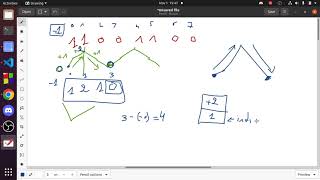
Nikhil Lohia 19 mins
Contiguous Array (LeetCode 525) | Mathematical approach with diagrams and visuals | Intuition
Cracking FAANG 11 mins
CONTIGUOUS ARRAY | LEETCODE # 525 | PYTHON SOLUTION
Code with Alisha 24 mins
Leetcode 525. Contiguous Array | Hashing | Leetcode Daily Challenge
Developer Docs 13 mins
Leetcode | 525. Contiguous Array | Medium | Java [2 Methods]
Coding BeTounsi 12 mins
Prefix sum Leetcode 525 Contiguous Array
Code With Deepa 5 mins
LeetCode 525 Contiguous Array|| Day 27 || C++ ||Easy Approach || Unordered_map
8 videos
did my crawler come up with invalid videos ? drop me a line.
Similar Problems
- problem 325: Maximum Size Subarray Sum Equals k
1 similar problem
Solved On The Same Day
3 easy
- problem 257: Binary Tree Paths
- problem 551: Student Attendance Record I
- problem 605: Can Place Flowers
- problem 236: Lowest Common Ancestor of a Binary Tree
- problem 289: Game of Life
- problem 397: Integer Replacement
- problem 413: Arithmetic Slices
- problem 567: Permutation in String
9 solutions
August 22, 2023
Extra
There are a few extra pages giving you some insights into my setup:
- Tech Stack - my development environment and tools
- AI - how AI helped me create this website (NOT solving the problems)
- Progress - progression over time
- Quality - code quality