Python 0784.py
class Solution:
    def letterCasePermutation(self, s: str) -> List[str]:
        dp = set([ "" ])
        for c in s:
            next = set()
            for i in dp:
                next.add(i + c.lower())
                next.add(i + c.upper())
            dp = next

        return dp
Difficulty
This problem is ranked as
and has an acceptance rate of about 76% (400k+ submissions).
Typical patterns to solve this problem:
easy
medium
hard
and has an acceptance rate of about 76% (400k+ submissions).
Typical patterns to solve this problem:
- Backtracking
- Bit Manipulation
- String
I solved 663 easy, 1250 medium and 309 hard problems
AI Disclaimer
Every single line of code was written by me, 100% from scratch, between August 2023 and August 2024.
However, two years later I set up this website and used various AI tools to generate most of the walkthrough / explanations below.
See this dedicated page for more details.
However, two years later I set up this website and used various AI tools to generate most of the walkthrough / explanations below.
See this dedicated page for more details.
Code Walkthrough
Overview
The provided implementation solves the problem of generating all possible strings that can be formed by toggling the case of each alphabetic character in the input string. It builds the result iteratively, expanding a set of partial strings with each character from the input. The final set contains every permutation where each letter may appear in either lower-case or upper-case form.
Core Logic
The algorithm starts by initializing a set that holds a single empty string. This set represents the collection of partial results built so far.
dp = set([""])For each character c in the input string, a new temporary set is created. The algorithm iterates over every string currently stored in dp and appends two versions of the character to each string: one forced to lower-case and one forced to upper-case. Both versions are added to the temporary set.
for c in s:
    next = set()
    for i in dp:
        next.add(i + c.lower())
        next.add(i + c.upper())
    dp = next
After processing all characters, the set dp holds every possible case permutation. The method returns this set directly.
return dpThe use of a set guarantees that duplicate strings are automatically eliminated, which can happen when the input contains characters that are not alphabetic (for example, digits or symbols). In such cases, c.lower() and c.upper() produce identical results, and the set collapses the duplicates, ensuring the output contains each unique permutation exactly once.
Edge Cases Handled
When the input string contains non-alphabetic characters, the lower-case and upper-case transformations yield the same character. The inner loop still attempts to add both versions, but because the container is a set, only one copy persists. This behavior naturally handles inputs that mix letters with numbers, punctuation, or whitespace without requiring explicit conditional checks.
If the input string is empty, the initial set contains only the empty string. The outer loop does not execute, and the method returns a set with a single empty string, which correctly represents the only permutation of an empty input.
The algorithm also gracefully processes strings that consist entirely of letters, digits, or any combination thereof. The case conversion functions are applied uniformly, and the set semantics ensure that the final collection reflects the correct number of distinct permutations.
Performance Optimizations
The implementation leverages a set for both intermediate and final storage. This choice provides constant-time membership checks and automatic deduplication, which eliminates the need for additional logic to filter out repeated entries. By reassigning dp to the newly built set after each character, the code discards the previous collection, allowing the Python garbage collector to reclaim memory that is no longer needed.
Using c.lower() and c.upper() directly on each character avoids the overhead of conditional branching based on character type. The functions are built-in and highly optimized, ensuring that the case conversion step incurs minimal cost.
The iterative approach builds each permutation exactly once, avoiding recursive call overhead and stack usage. This results in a straightforward control flow that scales linearly with the length of the input string while the number of generated strings grows exponentially, as dictated by the problem definition. The use of a set also means that the final return value is already in a hash-based container, which can be advantageous for callers that need fast lookup of the generated permutations.
written by openai gpt
ELI5 - Simplified Explanation
Imagine you have a box of magic letters. Every time you pick up a letter, it has a special power to change its shape. Sometimes it wants to be a tiny lowercase letter, and sometimes it wants to be a big uppercase letter.
This code starts with an empty list to hold combinations. It looks at the string one letter at a time. For every letter it finds, it takes all the combinations it has made so far and tries two new things. It takes the current combination and adds the small version of the letter to it, and then it also takes the same combination and adds the big version of the letter to it instead.
It keeps doing this for every single letter in the string. If the string is cat, it starts with an empty space and builds up. First, it makes c and C. Then it takes those and adds a to make ca, Ca, cA, and CA. Finally, it adds t to make all the possible ways you could write that word with different sizes for each letter. By the time it reaches the end, it has a collection of every possible mix of big and small letters that could be formed from the original word.
written by google gemini
Code Quality
Several LLMs ranked my code quality on a scale from 1 (very poor) to 10 (outstanding):
n = 27
|
median = 7
|
μ = 6.33
|
σ = 1.56
Complexity Analysis
Time: exponential
As a rule of thumb, the maximum input size for one second execution time is
As a rule of thumb, the maximum input size for one second execution time is
- factorial: up to 10 elements
- exponential: up to 20 elements
- polynomial: a few thousand elements
- loglinear: up to 100,000 elements
- linear: a few million elements
- logarithmic: a billion elements
- constant: practically unlimited
generated automatically
Other Solutions
I wrote a basic crawler to find other solutions to that problem.
Obviously, I did that after I solved the problem myself.
In general, AlgoMonster and WalkCCC solutions are high-quality and always worth a look.
I haven't checked most of the other solutions, but they might be helpful as well.
And of course, the LeetCode forum is always a good place (or even the best) to look for alternative approaches.
(click on a column header to sort the table)
| author | ||||||||||
|---|---|---|---|---|---|---|---|---|---|---|
| author | solutions | |||||||||
| www | AlgoMonster | C++ | Java | Python | TS | |||||
| WalkCCC | C++ | Java | ||||||||
| leetcode.ca | C++ | Java | Python | Rust | Go | TS | ||||
| LeetcodeHelp | C++ | Java | Python | |||||||
| MemoryLimitExceeded | C++ | Python | ||||||||
| Progiez | C++ | Java | Python | |||||||
| github | BigEggStudy | C# | ||||||||
| black-shadows | C++ | |||||||||
| charles-wangkai | Java | |||||||||
| everthis | JS | |||||||||
| fartem | Ruby | |||||||||
| fengvyi | C++ | |||||||||
| gouthampradhan | Java | |||||||||
| halfrost | Go | |||||||||
| JoshCrozier | JS | |||||||||
| keineahnung2345 | C++ | |||||||||
| Krazune | C++ | |||||||||
| lkwq007 | Python | |||||||||
| lzl124631x | C++ | |||||||||
| qiyuangong | Java | |||||||||
| ruoru | Rust | |||||||||
| sonugiri1043 | C++ | |||||||||
| suxrobGM | C# | |||||||||
| trung-hn | Python | |||||||||
| varunu28 | Java | |||||||||
| vthwang | Java | |||||||||
| zfang399 | C++ | |||||||||
| AlgoMonster | C++, Python, Java, TypeScript | |||||||||
| WalkCCC | C++, Java | |||||||||
| leetcode.ca | C++, Go, Java, Python, Rust, TypeScript | |||||||||
| LeetcodeHelp | C++, Java, Python | |||||||||
| MemoryLimitExceeded | Python, C++ | |||||||||
| Progiez | C++, Java, Python | |||||||||
| BigEggStudy | C# | |||||||||
| black-shadows | C++, C++ | |||||||||
| charles-wangkai | Java | |||||||||
| everthis | JavaScript | |||||||||
| fartem | Ruby | |||||||||
| fengvyi | C++ | |||||||||
| gouthampradhan | Java | |||||||||
| halfrost | Go | |||||||||
| JoshCrozier | JavaScript | |||||||||
| keineahnung2345 | C++ | |||||||||
| Krazune | C++ | |||||||||
| lkwq007 | Python | |||||||||
| lzl124631x | C++ | |||||||||
| qiyuangong | Java | |||||||||
| ruoru | Rust | |||||||||
| sonugiri1043 | C++ | |||||||||
| suxrobGM | C# | |||||||||
| trung-hn | Python | |||||||||
| varunu28 | Java | |||||||||
| vthwang | Java | |||||||||
| zfang399 | C++ |
41 links
|
27 authors
|
9 languages
Videos
These are a few popular YouTube videos for this problem:
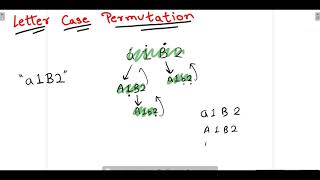

Codebix 9 mins
leetcode 784 Letter Case Permutation
code Explainer 9 mins
784. Letter Case Permutation | Backtracking Series | LEETCODE
Programming Live with Larry 9 mins
784. Letter Case Permutation (Leetcode Easy)
Tech Traversal 10 mins
Leetcode 784 | Letter Case Permutation
Coding Samurai's 21 mins
4.5 Letter Case Permutation | Leetcode 784 | Backtracking using one template series | C++
The Local Coder! 12 mins
784. Letter Case Permutation || Python || LeetCode
Satish Kumar 6 mins
Letter Case Permutation | LeetCode #784
7 videos
did my crawler come up with invalid videos ? drop me a line.
Similar Problems
- problem 78: Subsets
1 similar problem
Solved On The Same Day
2 medium
- problem 1689: Partitioning Into Minimum Number Of Deci-Binary Numbers
- problem 2391: Minimum Amount of Time to Collect Garbage
3 solutions
August 24, 2023
Extra
There are a few extra pages giving you some insights into my setup:
- Tech Stack - my development environment and tools
- AI - how AI helped me create this website (NOT solving the problems)
- Progress - progression over time
- Quality - code quality