Python 0081.py
class Solution:
    def search(self, nums: List[int], target: int) -> bool:
        # modified binary search
        def deeper(left, right):
            if nums[left] == target or nums[right] == target:
                return True

            if left >= right:
                return False

            pivot = (left + right) // 2
            if nums[pivot] == target:
                return True

            if nums[left] < nums[right]:
                # basic binary search
                if nums[pivot] > target:
                    return deeper(left, pivot - 1)
                else:
                    return deeper(pivot + 1, right)
            else:
                # full search
                return deeper(left, pivot - 1) or deeper(pivot + 1, right)

        return deeper(0, len(nums) - 1)
25 lines
|
834 bytes
|
submitted September 1, 2023
|
GitHub
16% comment ratio
|
tab size 4
|
low complexity
Difficulty
This problem is ranked as
and has an acceptance rate of about 40% (3+ million submissions).
Typical patterns to solve this problem:
easy
medium
hard
and has an acceptance rate of about 40% (3+ million submissions).
Typical patterns to solve this problem:
- Array
- Binary Search
I solved 663 easy, 1250 medium and 309 hard problems
AI Disclaimer
Every single line of code was written by me, 100% from scratch, between August 2023 and August 2024.
However, two years later I set up this website and used various AI tools to generate most of the walkthrough / explanations below.
See this dedicated page for more details.
However, two years later I set up this website and used various AI tools to generate most of the walkthrough / explanations below.
See this dedicated page for more details.
Code Walkthrough
Overview
The provided implementation defines a Solution class with a search method that determines whether a given target integer exists in a list nums. The list may be rotated and may contain duplicate values, which complicates the classic binary-search approach. The algorithm employs a recursive helper named deeper that narrows the search interval while handling the special cases introduced by rotation and duplicates.
Core Logic
Entry Point
def search(self, nums: List[int], target: int) -> bool:
    return deeper(0, len(nums) - 1)
The method starts the recursion with the full range of indices, from 0 to len(nums) - 1.
Recursive Helper
def deeper(left, right):
    if nums[left] == target or nums[right] == target:
        return True

    if left >= right:
        return False

    pivot = (left + right) // 2
    if nums[pivot] == target:
        return True
The first three conditional blocks perform quick checks:
- The ends of the current interval are examined; if either matches the target, the search succeeds immediately.
- When the interval collapses (
left >= right) without a match, the function returnsFalse. - The midpoint (
pivot) is computed and compared to the target, providing the classic binary-search shortcut.
Determining Search Strategy
    if nums[left] < nums[right]:
        # basic binary search
        if nums[pivot] > target:
            return deeper(left, pivot - 1)
        else:
            return deeper(pivot + 1, right)
    else:
        # full search
        return deeper(left, pivot - 1) or deeper(pivot + 1, right)
The algorithm distinguishes two scenarios based on the relationship between the values at the current interval’s boundaries:
-
Ordered Sub-array (
nums[left] < nums[right]) - The segment is strictly increasing, so a standard binary-search decision can be made. If the midpoint value exceeds the target, the left half is explored; otherwise, the right half is explored. -
Potential Rotation or Duplicates (
nums[left] >= nums[right]) - The ordering guarantee is lost. In this case the function cannot decide which side may contain the target, so it recursively searches both halves and combines the results with a logical OR. This ensures that any occurrence of the target in either sub-range is found.
Edge Cases Handled
-
Single-Element List - The early boundary check (
nums[left] == target or nums[right] == target) captures the only element, and theleft >= rightguard prevents further recursion. -
All Elements Identical - When every entry equals the same value, the condition
nums[left] < nums[right]is false, causing the algorithm to fall back to the “full search” branch. The recursive OR exploration guarantees that the target is found if it matches the repeated value, and that the search terminates correctly when it does not. -
Empty List - The initial call uses
right = len(nums) - 1. For an empty listrightbecomes-1, makingleft >= righttrue on the first invocation, and the function returnsFalsewithout accessing any list element. -
Target at Interval Boundaries - The explicit check of
nums[left]andnums[right]before any further division catches targets located at the edges of the current segment, avoiding unnecessary recursion.
Performance Optimizations
-
Early Termination on Boundary Matches - By checking the leftmost and rightmost elements at each recursion level, the algorithm can often finish in constant time when the target lies at an interval edge.
-
Pivot Equality Shortcut - The immediate comparison of
nums[pivot]to the target eliminates the need for deeper exploration when the midpoint is the sought value. -
Selective Binary Search - When the current sub-array is confirmed to be sorted (
nums[left] < nums[right]), the algorithm reduces the search space by half, preserving the logarithmic behavior of classic binary search for those portions. -
Short-Circuit OR Evaluation - In the “full search” branch, the expression
deeper(left, pivot - 1) or deeper(pivot + 1, right)leverages Python’s short-circuit semantics. If the left recursive call finds the target, the right call is never executed, saving work in many practical cases. -
Avoidance of Extra Data Structures - The recursion operates directly on index boundaries, requiring only a constant amount of additional stack space per call and no auxiliary arrays or hash tables.
Flow Summary
The recursion proceeds by repeatedly narrowing the interval. When the interval is ordered, it behaves like a conventional binary search, halving the problem size each step. When ordering cannot be guaranteed because of rotation or duplicate values, the algorithm conservatively explores both halves, ensuring correctness at the cost of potentially higher recursion depth. The combination of early boundary checks, pivot comparison, and short-circuit logic provides a balanced approach that adapts to the structure of the input data while keeping the implementation concise.
written by openai gpt
ELI5 - Simplified Explanation
Imagine a long row of numbered toy boxes placed in a line. Some boxes are sorted nicely from smallest to biggest, but some might be tumbled around a bit. The goal is to find if a specific special toy is hiding inside one of these boxes.
The code starts by looking at the very first box and the very last box in the long line. It checks if the special toy is right there at the ends. If it is not, the code picks the middle box to peek inside.
If the row of boxes looks like it is sorted properly, the code knows exactly which side to check next so it does not have to look through every single box. It simply cuts the line in half and decides whether to go left or right.
If the boxes are scrambled and do not follow a simple order, the code decides to be extra careful. It splits the line in half and chooses to search both sides, one after the other, until it finds the special toy. It keeps zooming in on smaller groups of boxes until the search is done.
written by google gemini
Code Quality
Several LLMs ranked my code quality on a scale from 1 (very poor) to 10 (outstanding):
n = 26
|
median = 6
|
μ = 6.12
|
σ = 1.34
Complexity Analysis
Time: linear
As a rule of thumb, the maximum input size for one second execution time is
As a rule of thumb, the maximum input size for one second execution time is
- factorial: up to 10 elements
- exponential: up to 20 elements
- polynomial: a few thousand elements
- loglinear: up to 100,000 elements
- linear: a few million elements
- logarithmic: a billion elements
- constant: practically unlimited
generated automatically
Other Solutions
I wrote a basic crawler to find other solutions to that problem.
Obviously, I did that after I solved the problem myself.
In general, AlgoMonster and WalkCCC solutions are high-quality and always worth a look.
I haven't checked most of the other solutions, but they might be helpful as well.
And of course, the LeetCode forum is always a good place (or even the best) to look for alternative approaches.
(click on a column header to sort the table)
| author | ||||||||||
|---|---|---|---|---|---|---|---|---|---|---|
| author | solutions | |||||||||
| www | AlgoMonster | C++ | Python | Java | TS | |||||
| WalkCCC | C++ | Python | Java | |||||||
| leetcode.ca | C++ | Python | Rust | JS | Java | Go | TS | |||
| LeetcodeHelp | C++ | Python | Java | |||||||
| MemoryLimitExceeded | C++ | Python | ||||||||
| Progiez | C++ | Python | Java | |||||||
| github | aylei | Rust | ||||||||
| begeekmyfriend | C | |||||||||
| BigEggStudy | C# | |||||||||
| black-shadows | C++ | |||||||||
| charles-wangkai | Java | |||||||||
| chenyanzhe | C++ | |||||||||
| everthis | JS | |||||||||
| gaosq0604 | Python | |||||||||
| Garvit244 | Python | |||||||||
| halfrost | Go | |||||||||
| JoshCrozier | JS | |||||||||
| keineahnung2345 | C++ | |||||||||
| lennylxx | C | |||||||||
| linouk23 | C++ | |||||||||
| lkwq007 | Python | |||||||||
| luangong | C++ | |||||||||
| MacJim | C++ | |||||||||
| qiyuangong | Python | |||||||||
| ruoru | Rust | |||||||||
| shreymehul | C# | |||||||||
| suxrobGM | C# | |||||||||
| varunu28 | Java | |||||||||
| vli02 | C | |||||||||
| wisdompeak | C++ | |||||||||
| XiaotaoGuo | C++ | |||||||||
| YuriSpiridonov | Python | |||||||||
| zfang399 | C++ | |||||||||
| AlgoMonster | C++, Python, Java, TypeScript | |||||||||
| WalkCCC | C++, Python, Java | |||||||||
| leetcode.ca | C++, Go, Java, JavaScript, Python, Rust, TypeScript | |||||||||
| LeetcodeHelp | C++, Java, Python | |||||||||
| MemoryLimitExceeded | Python, C++ | |||||||||
| Progiez | C++, Java, Python | |||||||||
| aylei | Rust | |||||||||
| begeekmyfriend | C | |||||||||
| BigEggStudy | C# | |||||||||
| black-shadows | C++, C++ | |||||||||
| charles-wangkai | Java | |||||||||
| chenyanzhe | C++ | |||||||||
| everthis | JavaScript | |||||||||
| gaosq0604 | Python | |||||||||
| Garvit244 | Python | |||||||||
| halfrost | Go | |||||||||
| JoshCrozier | JavaScript | |||||||||
| keineahnung2345 | C++ | |||||||||
| lennylxx | C | |||||||||
| linouk23 | C++ | |||||||||
| lkwq007 | Python | |||||||||
| luangong | C++ | |||||||||
| MacJim | C++ | |||||||||
| qiyuangong | Python | |||||||||
| ruoru | Rust | |||||||||
| shreymehul | C# | |||||||||
| suxrobGM | C# | |||||||||
| varunu28 | Java | |||||||||
| vli02 | C | |||||||||
| wisdompeak | C++ | |||||||||
| XiaotaoGuo | C++ | |||||||||
| YuriSpiridonov | Python | |||||||||
| zfang399 | C++ |
49 links
|
33 authors
|
9 languages
Videos
These are a few popular YouTube videos for this problem:












NeetCodeIO 18 mins
Search in Rotated Sorted Array II - Leetcode 81 - Python
Knowledge Center 16 mins
Search in Rotated Sorted Array II | LeetCode 81 | C++, Java, Python
Ayushi Sharma 21 mins
Search in Rotated Sorted Array II | Leetcode 81 | Binary Search | Day-28
Algorithms Made Easy 4 mins
Search in Rotated Sorted Array II | Live Coding with Explanation | Leetcode #81
Happy Coding 16 mins
LeetCode 81. Search in Rotated Sorted Array II
Coding Decoded 14 mins
Search in Rotated Sorted Array II | Leetcode Nov 2020 Day 20 | Leetcode 81
Coding Decoded 3 mins
Search in Rotated Sorted Array II | Leetcode 81 | Binary Search 🔥🔥 | Live coding session
Programming Live with Larry 26 mins
Daily Leetcode #1227: Aug 10, 2023 - 81. Search in Rotated Sorted Array II
Programming Live with Larry 18 mins
Daily Leetcode #727: Mar 28, 2022 - 81. Search in Rotated Sorted Array II
LeetCodeWithMonu 12 mins
81. Search in Rotated Sorted Array II - Binary Search - LeetCode Daily Challenge - JavaScript
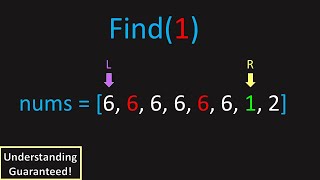
Code With Zi 12 mins
Can You Find The Target? (LeetCode 81: Search in Rotated Sorted Array II)
CodeFreaks 14 mins
81 || Search in Rotated Sorted Array II || C++ || Leetcode Daily Challenge
Programming Live with Larry 30 mins
Daily Leetcode #234: Nov 20, 2020 - 81. Search in Rotated Sorted Array II
Mayur Programming Club 25 mins
81. Search in Rotated Sorted Array II | Daily Leetcode Challenge | August | C++ | Java
Web Coder Abhishek 9 mins
Search in a Rotated Sorted Array II - Leetcode 81 | Binary Search
iOSxBank 13 mins
Day 302: LeetCode Problem 81. Search In Rotated Sorted Array II - Swift
Web Fusion with Bharadwaj 14 mins
68. Leetcode 81. Search in Rotated Sorted Array II : JAVA
ExtremeProgrammer 3 mins
No Sound Leetcode 81: Search in Rotated Sorted Array II
Alpha-Code 26 mins
Search in Rotated Sorted Array II - LeetCode 81 - Python - Binary Search
19 videos
did my crawler come up with invalid videos ? drop me a line.
Similar Problems
- problem 33: Search in Rotated Sorted Array
1 similar problem
Solved On The Same Day
12 easy
- problem 144: Binary Tree Preorder Traversal
- problem 145: Binary Tree Postorder Traversal
- problem 222: Count Complete Tree Nodes
- problem 404: Sum of Left Leaves
- problem 501: Find Mode in Binary Search Tree
- problem 543: Diameter of Binary Tree
- problem 559: Maximum Depth of N-ary Tree
- problem 589: N-ary Tree Preorder Traversal
- problem 590: N-ary Tree Postorder Traversal
- problem 637: Average of Levels in Binary Tree
- problem 700: Search in a Binary Search Tree
- problem 703: Kth Largest Element in a Stream
- problem 79: Word Search
- problem 97: Interleaving String
- problem 99: Recover Binary Search Tree
- problem 173: Binary Search Tree Iterator
- problem 199: Binary Tree Right Side View
- problem 230: Kth Smallest Element in a BST
- problem 235: Lowest Common Ancestor of a Binary Search Tree
- problem 341: Flatten Nested List Iterator
- problem 429: N-ary Tree Level Order Traversal
- problem 508: Most Frequent Subtree Sum
- problem 513: Find Bottom Left Tree Value
- problem 538: Convert BST to Greater Tree
- problem 65: Valid Number
- problem 85: Maximal Rectangle
- problem 87: Scramble String
- problem 126: Word Ladder II
- problem 127: Word Ladder
30 solutions
September 1, 2023
Extra
There are a few extra pages giving you some insights into my setup:
- Tech Stack - my development environment and tools
- AI - how AI helped me create this website (NOT solving the problems)
- Progress - progression over time
- Quality - code quality