Python 0810.py
class Solution:
    def xorGame(self, nums: List[int]) -> bool:
        # the last player who removes a number always loses
        if (len(nums) & 1) == 0:
            return True

        # odd count
        return reduce(xor, nums) == 0
8 lines
|
248 bytes
|
submitted July 5, 2024
|
GitHub
40% comment ratio
|
tab size 4
|
low complexity
Difficulty
This problem is ranked as
and has an acceptance rate of about 67% (30k+ submissions).
Typical patterns to solve this problem:
easy
medium
hard
and has an acceptance rate of about 67% (30k+ submissions).
Typical patterns to solve this problem:
- Array
- Bit Manipulation
- Game Theory
- Math
I solved 663 easy, 1250 medium and 309 hard problems
AI Disclaimer
Every single line of code was written by me, 100% from scratch, between August 2023 and August 2024.
However, two years later I set up this website and used various AI tools to generate most of the walkthrough / explanations below.
See this dedicated page for more details.
However, two years later I set up this website and used various AI tools to generate most of the walkthrough / explanations below.
See this dedicated page for more details.
Code Walkthrough
Overview
The provided implementation defines a Solution class with a single method xorGame. The method determines whether the first player can guarantee a win in a two-player impartial game where players alternately remove numbers from a list, and the player who makes the last move loses. The logic hinges on parity of the list length and the cumulative XOR of all elements.
Key Steps
Parity Check
The first conditional evaluates the length of the input list.
if (len(nums) & 1) == 0:
    return True
The bitwise AND with 1 extracts the least-significant bit, effectively testing whether the count of numbers is even. When the count is even, the method immediately returns True, indicating that the first player has a forced win regardless of the actual values in the list.
XOR Evaluation for Odd Length
If the list length is odd, the method proceeds to compute the XOR of all elements using functools.reduce combined with the xor operator.
return reduce(xor, nums) == 0The expression evaluates to True when the cumulative XOR equals zero, which is the condition under which the first player can still force a win despite the odd count.
Edge Cases Handled
When the input list is empty, len(nums) is 0, which satisfies the even-length condition, and the method returns True. This aligns with the game definition because there are no moves to make, and the first player trivially satisfies the win condition.
For a single-element list, the length is odd, so the XOR reduction is performed on that sole element. The result is True only when that element is 0, because 0 xor with nothing else yields 0. This correctly captures the scenario where removing the only non-zero element would cause the first player to lose, while a zero value leads to an immediate win.
If the list contains duplicate values that cancel each other out under XOR (e.g., [5, 5]), the reduction yields 0. In an odd-length context such as [5, 5, 0], the final XOR is also 0, allowing the first player to win. The code naturally accommodates these cancellations without additional logic.
Performance Optimizations
The parity test uses a bitwise operation (len(nums) & 1) instead of a modulo operation, which is marginally faster because it avoids division. This choice reduces the overhead of the initial check, especially for large inputs.
The XOR aggregation leverages functools.reduce with the built-in xor function from the operator module. This approach streams through the list in a single pass, maintaining only the running XOR value. It avoids the creation of intermediate data structures, keeping memory usage minimal and ensuring that the algorithm scales linearly with the size of the input.
By short-circuiting on the even-length case, the method bypasses the reduction entirely for half of all possible inputs, saving both time and computational effort when the list length is even. This early exit is a practical optimization that aligns with the mathematical property that an even number of elements guarantees a winning strategy for the first player.
written by openai gpt
ELI5 - Simplified Explanation
Imagine a group of friends is playing a game with a big pile of numbered blocks. Each friend takes a turn picking up one block and putting it aside. There is a secret rule about how these blocks affect the game based on their numbers.
When there is an even number of blocks in the pile, the game starts in a way that makes it easy for the first player to win. It is like having an even number of crackers so that everyone can have a fair share.
If there is an odd number of blocks, things get trickier. The players have to look at all the numbers on the blocks and combine them in a special way. This special way is a bit like a math puzzle where the numbers cancel each other out. If the final result of this puzzle is zero, it means the players are stuck in a balanced state and the first player can win. If the result is not zero, the first player will not be able to win this specific game.
written by google gemini
Code Quality
Several LLMs ranked my code quality on a scale from 1 (very poor) to 10 (outstanding):
n = 27
|
median = 7
|
μ = 6.85
|
σ = 1.94
Complexity Analysis
Time: linear
As a rule of thumb, the maximum input size for one second execution time is
As a rule of thumb, the maximum input size for one second execution time is
- factorial: up to 10 elements
- exponential: up to 20 elements
- polynomial: a few thousand elements
- loglinear: up to 100,000 elements
- linear: a few million elements
- logarithmic: a billion elements
- constant: practically unlimited
generated automatically
Other Solutions
I wrote a basic crawler to find other solutions to that problem.
Obviously, I did that after I solved the problem myself.
In general, AlgoMonster and WalkCCC solutions are high-quality and always worth a look.
I haven't checked most of the other solutions, but they might be helpful as well.
And of course, the LeetCode forum is always a good place (or even the best) to look for alternative approaches.
(click on a column header to sort the table)
| author | |||||||||
|---|---|---|---|---|---|---|---|---|---|
| author | solutions | ||||||||
| www | AlgoMonster | C++ | Python | Java | TS | ||||
| WalkCCC | C++ | Python | Java | ||||||
| leetcode.ca | C++ | Python | Java | Go | |||||
| LeetcodeHelp | C++ | Python | Java | ||||||
| Progiez | C++ | Python | Java | ||||||
| github | black-shadows | Python | |||||||
| charles-wangkai | Java | ||||||||
| everthis | JS | ||||||||
| fsq | C++ | ||||||||
| halfrost | Go | ||||||||
| JoshCrozier | JS | ||||||||
| ruoru | Rust | ||||||||
| suxrobGM | C# | ||||||||
| wisdompeak | C++ | ||||||||
| zfang399 | C++ | ||||||||
| AlgoMonster | C++, Python, Java, TypeScript | ||||||||
| WalkCCC | C++, Python, Java | ||||||||
| leetcode.ca | C++, Go, Java, Python | ||||||||
| LeetcodeHelp | C++, Java, Python | ||||||||
| Progiez | C++, Java, Python | ||||||||
| black-shadows | Python, Python | ||||||||
| charles-wangkai | Java | ||||||||
| everthis | JavaScript | ||||||||
| fsq | C++ | ||||||||
| halfrost | Go | ||||||||
| JoshCrozier | JavaScript | ||||||||
| ruoru | Rust | ||||||||
| suxrobGM | C# | ||||||||
| wisdompeak | C++ | ||||||||
| zfang399 | C++ |
27 links
|
15 authors
|
8 languages
Videos
These are a few popular YouTube videos for this problem:
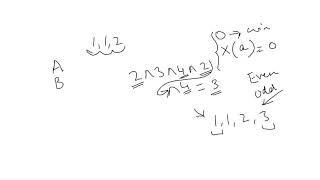
2 videos
did my crawler come up with invalid videos ? drop me a line.
Solved On The Same Day
2 medium
- problem 795: Number of Subarrays with Bounded Maximum
- problem 3179: Find the N-th Value After K Seconds
3 solutions
July 5, 2024
Extra
There are a few extra pages giving you some insights into my setup:
- Tech Stack - my development environment and tools
- AI - how AI helped me create this website (NOT solving the problems)
- Progress - progression over time
- Quality - code quality