Python 0093.py
class Solution:
    @cache
    def deeper(self, s, have, dots):
        if dots == 3:
            # final part
            if not s:
                return
            if s[0] == "0" and len(s) > 1:
                return
            if int(s) > 255:
                return
            self.result.append(have + s)
            return

        if not s:
            return

        # performance
        need = 4 - dots
        if need*3 < len(s):
            return

        # no leading zeros
        if s[0] == "0":
            self.deeper(s[1:], have + s[:1] + ".", dots + 1)
            return

        # 1,2 or 3 digits
        for i in range(1, 4):
            if i == 3:
                if int(s[:i]) > 255:
                    break
            self.deeper(s[i:], have + s[:i] + ".", dots + 1)


    def restoreIpAddresses(self, s: str) -> List[str]:
        self.result = []
        self.deeper(s, "", 0)
        return self.result
39 lines
|
980 bytes
|
submitted August 18, 2023
|
GitHub
13% comment ratio
|
tab size 4
|
low complexity
Difficulty
This problem is ranked as
and has an acceptance rate of about 57% (1+ million submissions).
Typical patterns to solve this problem:
easy
medium
hard
and has an acceptance rate of about 57% (1+ million submissions).
Typical patterns to solve this problem:
- Backtracking
- String
I solved 663 easy, 1250 medium and 309 hard problems
AI Disclaimer
Every single line of code was written by me, 100% from scratch, between August 2023 and August 2024.
However, two years later I set up this website and used various AI tools to generate most of the walkthrough / explanations below.
See this dedicated page for more details.
However, two years later I set up this website and used various AI tools to generate most of the walkthrough / explanations below.
See this dedicated page for more details.
Code Walkthrough
Overview
The provided Solution class implements a depth-first search that enumerates all possible ways to insert three dots into a numeric string so that each resulting segment forms a valid IPv4 octet. The public method restoreIpAddresses initializes the search and returns the collected addresses. The core recursive routine deeper builds partial results while enforcing the numeric constraints of each octet.
Core Logic
Entry Point
def restoreIpAddresses(self, s: str) -> List[str]:
    self.result = []
    self.deeper(s, "", 0)
    return self.result
The method creates an empty list self.result, starts the recursion with the original string s, an empty prefix have, and a dot counter set to zero. When the recursion finishes, the accumulated list of valid addresses is returned.
Recursive Exploration
@cache
def deeper(self, s, have, dots):
The decorator @cache memoizes calls, preventing repeated work for identical (s, have, dots) triples. The parameters are:
s- the remaining substring to process.have- the partially built address, including trailing dots after each completed segment.dots- the number of dots already placed.
Completion Condition
if dots == 3:
    if not s:
        return
    if s[0] == "0" and len(s) > 1:
        return
    if int(s) > 255:
        return
    self.result.append(have + s)
    return
When three dots have been placed, exactly one segment remains. The code checks that the segment is non-empty, does not contain a leading zero unless it is a single zero, and does not exceed the maximum value 255. If all checks pass, the full address is assembled by concatenating have and the final segment, then stored.
Early Termination
if not s:
    return
If the input string is exhausted before three dots are placed, the current path cannot yield a valid address and the recursion stops.
Pruning Based on Remaining Length
need = 4 - dots
if need*3 < len(s):
    return
At any point, the algorithm knows how many segments are still required (need). Since each segment can contain at most three characters, the remaining string must not be longer than need * 3. If it is, the branch is abandoned early, reducing the search space.
Handling a Leading Zero
if s[0] == "0":
    self.deeper(s[1:], have + s[:1] + ".", dots + 1)
    return
When the next character is '0', the only permissible segment is the single digit zero. The code forces the choice of a one-character segment, appends a dot, increments the dot count, and recurses on the rest of the string. This prevents illegal multi-digit segments that start with zero.
Exploring 1-, 2-, and 3-Digit Segments
for i in range(1, 4):
    if i == 3:
        if int(s[:i]) > 255:
            break
    self.deeper(s[i:], have + s[:i] + ".", dots + 1)
For non-zero leading characters, the loop attempts segment lengths of one, two, and three. When the length reaches three, an additional numeric bound check (int(s[:i]) > 255) ensures that values above 255 are discarded, and the loop terminates early because longer lengths are impossible. Each valid slice is appended with a dot, the dot counter is increased, and recursion proceeds with the remaining substring.
Edge Cases Addressed
- Empty input - The early
if not s:guard prevents any processing when the original string is empty. - Segments with leading zeros - The explicit branch for
s[0] == "0"guarantees that a segment like"01"or"00"is never accepted. - Maximum octet value - Both the final-segment check (
int(s) > 255) and the three-digit loop guard (int(s[:i]) > 255) enforce the upper bound of 255. - Insufficient characters - The pruning condition
need*3 < len(s)eliminates paths where the remaining characters exceed the maximum allowed length for the pending segments. - Exact length match - When the remaining characters exactly fit the needed segments (e.g., three characters left for one segment), the algorithm proceeds without unnecessary branching.
Performance Optimizations
The recursion is heavily trimmed by three mechanisms:
-
Memoization - The
@cachedecorator stores results of previously visited states, so identical subproblems are solved once. This is especially beneficial when the same suffix appears after different dot placements. -
Length-based pruning - By calculating the minimal and maximal possible lengths for the remaining segments (
need*3), the algorithm discards branches that cannot possibly form a valid address, avoiding exponential blow-up. -
Early break on overflow - Within the loop that tries three-character segments, the moment a three-digit slice exceeds 255 the loop stops. This prevents unnecessary recursive calls for longer slices that would also be invalid.
Together, these strategies keep the search space tight, ensuring that only feasible segmentations are explored while reusing work wherever possible.
written by openai gpt
ELI5 - Simplified Explanation
Imagine there is a big pile of numbers, and it is time to turn them into a special digital address that computers use to talk to each other. This address looks like four groups of numbers separated by little dots.
The computer starts by looking at all the numbers in a line. To make sure the address is correct, it tries different ways to slice the line into four pieces. It has a special rule that says each piece cannot be bigger than two hundred and fifty-five. It also makes sure there are no silly zeros at the very front of any group unless the group is just the number zero itself.
The computer explores different paths by taking one, two, or three numbers at a time and putting a dot after them. Every time it finishes adding a dot, it checks if it still has more work to do or if it has reached the very end of the line. If it reaches the end and the address looks perfect, it saves that address in a list. It keeps trying all the different combinations until it has found every possible version of the address that could exist. It is like a puzzle where the computer tries every piece in every spot until the whole picture is complete.
written by google gemini
Code Quality
Several LLMs ranked my code quality on a scale from 1 (very poor) to 10 (outstanding):
n = 27
|
median = 7
|
μ = 6.74
|
σ = 0.97
Complexity Analysis
not analyzed yet
Other Solutions
I wrote a basic crawler to find other solutions to that problem.
Obviously, I did that after I solved the problem myself.
In general, AlgoMonster and WalkCCC solutions are high-quality and always worth a look.
I haven't checked most of the other solutions, but they might be helpful as well.
And of course, the LeetCode forum is always a good place (or even the best) to look for alternative approaches.
(click on a column header to sort the table)
| author | |||||||||||
|---|---|---|---|---|---|---|---|---|---|---|---|
| author | solutions | ||||||||||
| www | AlgoMonster | C++ | Python | Java | TS | ||||||
| WalkCCC | C++ | Python | Java | ||||||||
| leetcode.ca | C++ | Python | C# | Java | Go | TS | |||||
| LeetcodeHelp | C++ | Python | Java | ||||||||
| MemoryLimitExceeded | C++ | Python | |||||||||
| Progiez | C++ | Python | Java | ||||||||
| github | aylei | Rust | |||||||||
| begeekmyfriend | C | ||||||||||
| BigEggStudy | C# | ||||||||||
| black-shadows | C++ | ||||||||||
| charles-wangkai | Java | ||||||||||
| chenyanzhe | C++ | ||||||||||
| everthis | JS | ||||||||||
| gaosq0604 | Python | ||||||||||
| Garvit244 | Python | ||||||||||
| halfrost | Go | ||||||||||
| haoel | C++ | ||||||||||
| JoshCrozier | JS | ||||||||||
| keineahnung2345 | C++ | ||||||||||
| lennylxx | C++ | ||||||||||
| linouk23 | C++ | ||||||||||
| lkwq007 | Python | ||||||||||
| luangong | C++ | ||||||||||
| MacJim | C++ | ||||||||||
| martianoff | Scala | ||||||||||
| qiyuangong | Python | ||||||||||
| ruoru | Rust | ||||||||||
| shreymehul | C# | ||||||||||
| suxrobGM | C# | ||||||||||
| vli02 | C | ||||||||||
| vthwang | Java | ||||||||||
| XiaotaoGuo | C++ | ||||||||||
| zfang399 | C++ | ||||||||||
| AlgoMonster | C++, Python, Java, TypeScript | ||||||||||
| WalkCCC | C++, Python, Java | ||||||||||
| leetcode.ca | C++, C#, Go, Java, Python, TypeScript | ||||||||||
| LeetcodeHelp | C++, Java, Python | ||||||||||
| MemoryLimitExceeded | Python, C++ | ||||||||||
| Progiez | C++, Java, Python | ||||||||||
| aylei | Rust | ||||||||||
| begeekmyfriend | C | ||||||||||
| BigEggStudy | C# | ||||||||||
| black-shadows | C++, C++ | ||||||||||
| charles-wangkai | Java | ||||||||||
| chenyanzhe | C++ | ||||||||||
| everthis | JavaScript | ||||||||||
| gaosq0604 | Python | ||||||||||
| Garvit244 | Python | ||||||||||
| halfrost | Go | ||||||||||
| haoel | C++ | ||||||||||
| JoshCrozier | JavaScript | ||||||||||
| keineahnung2345 | C++ | ||||||||||
| lennylxx | C++ | ||||||||||
| linouk23 | C++ | ||||||||||
| lkwq007 | Python | ||||||||||
| luangong | C++ | ||||||||||
| MacJim | C++ | ||||||||||
| martianoff | Scala | ||||||||||
| qiyuangong | Python | ||||||||||
| ruoru | Rust | ||||||||||
| shreymehul | C# | ||||||||||
| suxrobGM | C# | ||||||||||
| vli02 | C | ||||||||||
| vthwang | Java | ||||||||||
| XiaotaoGuo | C++ | ||||||||||
| zfang399 | C++ |
48 links
|
33 authors
|
10 languages
Videos
These are a few popular YouTube videos for this problem:






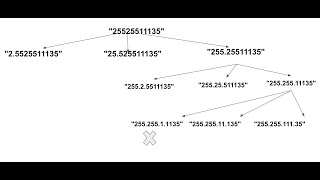





NeetCode 18 mins
Restore IP Addresses - Leetcode 93 - Python
codestorywithMIK 39 mins
Restore IP Addresses | Recursive Tree | Diagram | META | Leetcode 93
Pepcoding 17 mins
Restore IP Addresses || Leetcode
code Explainer 8 mins
93. Restore IP Addresses | LEETCODE BACKTRACKING | LEETCODE MEDIUM | CODE EXPLAINER
Eric Programming 22 mins
[Java] Leetcode 93. Restore IP Addresses [Backtracking #3]
Coding Decoded 14 mins
Leetcode 93. Restore IP Addresses | Easy Peasy (Meta) | CodingDecoded SDE sheet
Jeevan Kumar - Cracckify 7 mins
LeetCode 93 Restore IP Addresses
happygirlzt 9 mins
LeetCode 93. Restore IP Addresses Explanation and Solution
Deep Tech 24 mins
93. Restore IP Addresses | LeetCode
happygirlzt 9 mins
LeetCode 93. Restore IP Addresses Chinese Version 中文解释
Programming Live with Larry 9 mins
93. Restore IP Addresses (Leetcode Medium)
CodeFreaks 20 mins
93 || Restore IP Addresses || Leetcode Daily Challenge
TheAnalyticGuy 12 mins
Leetcode 93 Restore IP Addresses (Java)
Programming Live with Larry 9 mins
Daily Leetcode #1026: Jan 21, 2023 - 93. Restore IP Addresses
Algorithms Casts 27 mins
Leetcode 93: Restore IP Addresses
Sleepy Cracker 10 mins
LeetCode 93 | Restore IP Addresses | Backtrack | Java
Code Scribbler 6 mins
LeetCode 93: Restore IP Addresses | C# Solution | Backtracking |
ExpertFunda 23 mins
Leetcode 93. Restore IP Addresses Java Solution with Backtracking Approach
Lit Code 11 mins
93. Restore IP Addresses - Leetcode
Ghumman Tech 8 mins
Leetcode Question 93 "Restore IP Addresses" in Javascript
20 videos
did my crawler come up with invalid videos ? drop me a line.
Solved On The Same Day
4 easy
- problem 205: Isomorphic Strings
- problem 905: Sort Array By Parity
- problem 922: Sort Array By Parity II
- problem 2423: Remove Letter To Equalize Frequency
- problem 18: 4Sum
- problem 80: Remove Duplicates from Sorted Array II
- problem 92: Reverse Linked List II
- problem 384: Shuffle an Array
- problem 1143: Longest Common Subsequence
- problem 1615: Maximal Network Rank
- problem 32: Longest Valid Parentheses
- problem 149: Max Points on a Line
13 solutions
August 18, 2023
Extra
There are a few extra pages giving you some insights into my setup:
- Tech Stack - my development environment and tools
- AI - how AI helped me create this website (NOT solving the problems)
- Progress - progression over time
- Quality - code quality